Hey there, if you’ve ever worked with metal heat treatment, you know a vacuum furnace isn’t just a box that gets hot—it’s the backbone for everything from aerospace turbine blades to medical device parts. As a vacuum furnace supplier, I get asked all the time: “What makes a good one? How do you QA the stuff that goes inside those chambers?” It’s not just about cranking up the heat; QC here is super specific, and skipping steps means parts that warp, fail, or even get ruined mid-process. Let’s break down the real, day-to-day QC standards we live by, no stuffy jargon, just what actually works. Vacuum Furnace
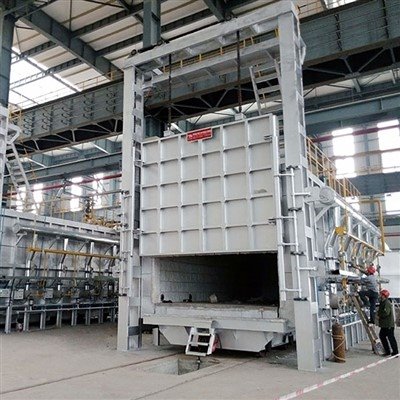
First up: base material and component validation. A vacuum furnace’s core is its chamber, heating elements, and insulation—cut corners here, and you’re gonna have leaks, hot spots, or elements that burn out fast. For chambers, we only use high-grade, low-carbon stainless steel or graphite for high-temp setups, right? But here’s the QC move we do: every raw sheet gets a helium leak test before it’s even welded. Wait, helium is key because it’s tiny, so even a pinhole the size of a molecule will show up. We also test heating elements (usually molybdenum, tungsten, or graphite) for uniform resistance—no dips or spikes, because a spot that’s too hot will melt parts, a spot too cold won’t get the job done. Insulation? Ceramic fiber or graphite felt—we check its thermal conductivity at our test bench before it goes in, so it doesn’t waste energy or cause uneven heating. Oh, and we don’t skip the smaller stuff: valves, gauges, and vacuum pumps. Roughing pumps go through a 24-hour run test to make sure they hold pressure, and high-vacuum valves get a cycle test (100+ opens/closes) to avoid leaks when it matters.
Next, vacuum integrity—this is make-or-break. If your furnace can’t hold a vacuum, you’re not heat-treating; you’re just heating metal in an oven full of air, which causes oxidation and ruins parts. Our QC here has two parts: initial leak testing and long-term hold time checks. First, when we assemble the chamber, we do a “hard vacuum leak test” using a mass spectrometer. We spray every weld, valve, and flange with helium, and if the detector picks up a reading above 1e-9 mbar L/s, that part gets re-welded or regasketed. Then, after we put the furnace through a full bake-out (to remove moisture from insulation, which is a huge hidden vacuum killer), we test its “hold time”: we pull a deep vacuum (1e-5 mbar for most industrial jobs) and time how long it takes to rise to 1e-4 mbar. If it rises too fast, there’s a leak we missed. I’ve seen other suppliers skip the bake-out test and end up with customers who call us at 2 a.m. because their furnace won’t pull a vacuum—we don’t do that.
Then there’s temperature uniformity and accuracy. Even a 10°F difference in a furnace zone can make a batch of aerospace parts scrap. So our QC lab has a custom 10-point thermocouple array we use during calibration. We run the furnace at its three most common temps: 1200°C (for brazing), 1600°C (for hardening steel), and 2200°C (for sintering ceramics), and check every point. The standard we follow here is “±5°C uniformity across the hot zone” for industrial furnaces—no exceptions. We also calibrate every thermocouple against a NIST-traceable standard before installing it, and after final assembly, we do a 8-hour soak test to make sure temp stays steady. Last year, a customer asked us to rush an order, and we almost skipped the 8-hour test, but our lead tech said, “Nah, that’s how you get a call back.” We did it, and sure enough, one thermocouple was off by 7°C—fixed it, no scrap, customer kept us for repeat business.
Cycle performance and durability. Vacuum furnaces run nonstop for weeks sometimes, so QC isn’t just a one-time check—it’s a stress test. We put every unit through a 50-cycle test, going from room temp to max temp, pulling a full vacuum, and cooling down. That checks for things like heating element expansion (do they short out when they grow?), gasket compression (do they still seal after repeated heating/cooling?), and pump longevity. We also test the control system—if it’s a PLC (programmable logic controller) setup, we simulate power outages, temp spikes, and vacuum drops to make sure the furnace shuts down safely, not by exploding or ruining the load. A friend of mine at another supplier told me their control system failed during a titanium alloy sinter, and the whole batch turned into scrap—we run 10 extra power outage tests just to avoid that.
Material compatibility testing. This is the part most suppliers gloss over, but it’s critical. Different loads need different furnace materials—you can’t use graphite insulation for aluminum brazing, because graphite will contaminate the metal. So when we custom-build a furnace for a specific job (we build a lot of custom units, not just stock), we run compatibility tests. For example, if it’s for medical grade stainless steel, we test that the heating elements won’t shed metal particles into the chamber. For titanium, we test that the vacuum level stays above 1e-6 mbar to prevent oxidation. We also keep a log of every test we do—so if a customer’s load fails, we can go back and check if the furnace was calibrated right, or if the material mix was off. That transparency is huge; customers don’t want to guess if their furnace is right for their part.
Documentation and traceability. Here’s the thing: a QC standard isn’t just tests—it’s proof. Every furnace leaves our shop with a full QC packet: leak test results, temp uniformity logs, cycle test data, calibration certificates for gauges, and a compatibility report. For regulated industries like aerospace or medical, that’s non-negotiable—they need to show their parts were processed in a furnace that meets specific standards. We also assign a serial number to every unit, so if there’s ever a recall (rare, but it happens), we can track exactly which parts were used and what tests they went through. I’ve heard of some suppliers that skip the packet to save time, but that’s a death sentence for repeat business—if a customer can’t audit their furnace, they’ll go to a supplier who gives them the paperwork.
Wait, but what about post-delivery QC? We don’t just drop the furnace and run—we do a startup check with every customer, and a 30-day follow-up call. When we set up a furnace, we help them calibrate their load thermocouples too, because even the best furnace is only as good as how it’s used. Last quarter, a small machine shop bought a used furnace from someone else, and they were having issues with their heat-treated parts warping. We went in, tested the furnace, and found the previous owner didn’t calibrate the thermocouples right, so the shop was running the furnace 20°F hotter than they thought. We fixed it, and now they’re a regular customer. That’s the real QC—support after the sale, not just before.
Now, let’s be real: no QC standard is perfect, but cutting corners is way more expensive than doing it right. A $500 leak test fix in our shop saves us from a $10,000 customer scrap bill. That’s why we stick to these standards, no matter how tight the deadline. If you’re in the market for a vacuum furnace, don’t just ask for a “high-quality unit”—ask for their test logs, their leak test specs, and their post-delivery support. We’re always here to talk through what you need—whether it’s a stock unit for small parts or a custom build for a unique heat treatment job. Shoot us a message to connect and walk through your project, no pressure.
Tempering Furnace References:
- ASM International. (2020). Heat Treater’s Guide: Practices and Procedures for Nonferrous Alloys. ASM International.
- Vacuum Furnace Manufacturers Association. (2019). Industrial Vacuum Furnace Quality Control Standards. VFMA Technical Report Series.
- ISO 9001:2015. Quality Management Systems – Requirements. International Organization for Standardization.
- American Society for Testing and Materials. (2021). Standard Test Method for Leak Detection in Vacuum Systems (ASTM E498-21). ASTM International.
- Industrial Heating Magazine. (2022). “QC in Vacuum Furnaces: What Suppliers Don’t Tell You.” Industrial Heating, Vol. 89, No. 3.
Danyang Dingfeng Industrial Furnace Co., Ltd.
Danyang Dingfeng Industrial Furnace Co., Ltd. is one of the most experienced vacuum furnace manufacturers and suppliers in China, also supports customized service with low price. Please feel free to wholesale high quality vacuum furnace made in China here from our factory. For pricelist, contact us now.
Address: Lizhuang Economic Development Zone, Danyang City
E-mail: saleszk@dffurnace.com
WebSite: https://www.dffurnace.com/
