When I first started working as a technical sales manager at a sludge centrifuge supply company, I’ll admit I had a narrow view of industrial sludge treatment. I spent my early days focusing on wastewater from food processing and municipal facilities—sectors where centrifuges were already a standard, well-understood piece of equipment. It wasn’t until a textile manufacturing plant manager reached out to me last year, frustrated with his current sludge handling process, that I began to dig into the question: Can a sludge centrifuge actually work for textile industry sludge? What followed was months of on-site visits, lab tests, and troubleshooting that taught me more than any product manual ever could. Sludge Centrifuge
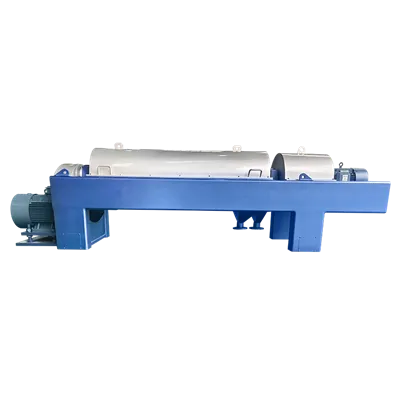
Textile industry sludge is a unique beast. Unlike municipal sludge, which is mostly organic matter, textile sludge is a messy mix of cotton and synthetic fiber remnants, dye particles, sizing agents, and leftover chemicals from bleaching and finishing processes. When the plant I visited tried to use filter presses to dewater this sludge, they hit a wall. The fine fiber particles would clog the filter cloths every two to three days, requiring hours of manual cleaning that pulled workers away from other critical tasks. The dewatered cake they produced was only 15-20% solids, which meant they were hauling three times more waste to landfills than necessary—costing them over $12,000 a month in disposal fees alone. That’s when they asked me: Could a centrifuge do better?
At first, I was cautious. Centrifuges rely on centrifugal force to separate solids from liquid, but their performance depends heavily on particle size, density, and the consistency of the sludge feed. Textile sludge’s variable composition—one week heavy on cotton from denim production, the next loaded with polyester from athletic wear manufacturing—seemed like it might throw off the delicate balance a centrifuge needs. So I partnered with the plant’s environmental team to run a series of tests using our test centrifuge unit. We took samples from their primary and secondary sludge streams, adjusted the polymer dosage (a key factor in flocculating fine particles), and ran trials at different bowl speeds and feed rates.
The results were surprising. For the primary sludge, which is mostly fiber and large particulate matter from the washing and spinning stages, the centrifuge produced a cake with 28-32% solids—almost double what their filter presses were achieving. Even the secondary sludge, which contains fine dye particles and residual chemicals, performed well. With a slightly increased polymer dosage to flocculate the small dye particles, we got a 24-26% solids cake. The best part? The centrifuge didn’t clog. Unlike filter cloths, which rely on surface filtration, centrifuges use centrifugal force to push solids against the bowl wall, so fine particles that would clog a filter just get trapped in the bowl’s internal solids layer, which only needs to be cleaned every two weeks in most cases.
Of course, it’s not as simple as just plugging a centrifuge into a textile plant’s wastewater line. There are specific considerations that come with textile sludge that you don’t find in other industries. For one, the variability of textile sludge is a constant challenge. A denim plant’s sludge will have much longer fiber strands than a polyester plant’s, and the pH level can swing depending on whether they’re in the middle of a bleaching cycle. That’s why we work closely with each client to customize the centrifuge’s settings and pre-train their operators. We also found that textile sludge often has higher levels of grease and oil from fabric finishing processes, which can coat the bowl’s surfaces if not properly managed. Our team developed a specialized rotor coating and a periodic cleaning protocol that prevents this buildup, extending the centrifuge’s operational life by several years.
Another factor is compliance. The textile industry is under increasing pressure to reduce its environmental footprint, and many regions have strict regulations on sludge disposal. The lower volume of dewatered cake from a centrifuge means fewer landfill trips, which directly reduces a plant’s carbon emissions and disposal costs. The plant I worked with was able to cut their sludge disposal costs by 45% after switching to our centrifuge—saving them over $5,400 a month. That’s a huge return on investment, especially for smaller textile shops that operate on tight margins. There’s also the added benefit of reducing the load on the plant’s wastewater treatment system. Dewatered sludge is easier to transport and process off-site, which means less risk of spills or leaks during hauling.
I’ve heard from other textile plant operators who have tried centrifuges in the past and were disappointed. Usually, it’s because they didn’t account for the unique characteristics of their sludge. One plant tried to use a standard centrifuge meant for municipal sludge, without adjusting the polymer dosage or rotor speed for their high-fiber sludge. They ended up with a cake that was too wet, and the centrifuge’s internal components got tangled in the long cotton fibers. That’s why our approach is different. We don’t just sell a centrifuge—we provide a complete solution. That includes on-site sludge testing, custom polymer training, operator training sessions, and a maintenance schedule tailored to textile sludge. We also work with clients to integrate the centrifuge with their existing wastewater treatment systems, so there’s no disruption to their production.
What excites me most about textile sludge treatment is the potential for reusing the dewatered sludge. Many textile fibers, even synthetic ones, can be processed into recycled materials. For example, cotton fiber from dewatered sludge can be turned into insulation material or compost, while polyester can be melted down and reused in new fabric production. The higher solids content from a centrifuge makes this recycling process much more feasible. I’ve already partnered with a textile recycling company to test dewatered centrifuge sludge, and early results show that the high fiber concentration makes it easier to separate and process. This turns what was once a waste product into a revenue stream for textile plants—a win-win that most hadn’t considered before.
Of course, no piece of equipment is perfect, and centrifuges have their limitations for textile sludge. If a plant’s sludge has very low solids content (less than 1%), or if there are extremely fine dye particles that don’t flocculate well, a centrifuge might not be the best option. In those cases, we often recommend combining a centrifuge with a pre-treatment step, like a dissolved air flotation (DAF) unit, to increase the solids concentration before it enters the centrifuge. We also advise against using centrifuges for sludge that has high levels of heavy metals, as these can accumulate in the centrifuge’s solids and require specialized disposal. But for most standard textile sludge streams, the benefits far outweigh the drawbacks.
Over the past year, we’ve installed 12 centrifuges at textile plants across the country, and every single one has exceeded the client’s expectations. One plant in North Carolina, which produces high-end silk fabric, had been struggling with sludge disposal costs that were eating into their profit margins. After installing our centrifuge, they reduced their sludge hauling frequency from twice a week to once every two weeks, and their disposal costs dropped by 52%. The operators told me that the centrifuge is easy to run, even for workers who have never used industrial dewatering equipment before. That’s another key point—centrifuges for textile sludge don’t require a team of specialized technicians to operate. We design our units with intuitive controls and simple maintenance procedures, so plant workers can quickly learn how to run them.
I think a lot of people in the industrial sector still see centrifuges as a one-size-fits-all solution, but the textile industry has taught me that customization is key. Every textile plant is different, with different processes, different sludge compositions, and different needs. That’s why we take the time to understand each client’s specific situation before recommending a centrifuge. We’ll visit their facility, sample their sludge, run tests in our in-house lab, and work with them to design a system that fits their budget and operational requirements. It’s not just about selling a machine—it’s about solving a problem.
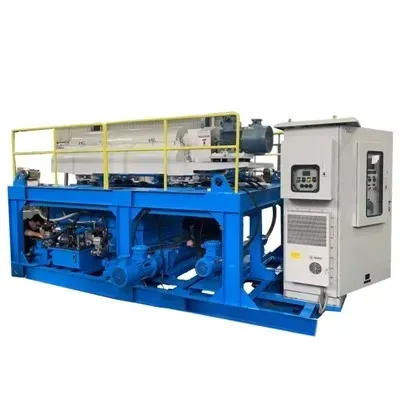
If you’re a textile plant manager or environmental engineer who’s tired of dealing with clogged filter presses, high disposal costs, and inconsistent sludge dewatering, I encourage you to reach out. We’ve helped dozens of textile plants improve their sludge treatment processes, and we can help yours too. Whether you’re looking to replace your current equipment, reduce your environmental footprint, or turn your waste into a reusable product, a sludge centrifuge could be the solution you’ve been searching for. Don’t let outdated sludge treatment methods hold your plant back—let’s work together to find a more efficient, cost-effective way to handle your textile sludge. Contact our team today to schedule a consultation and see how our centrifuges can work for your operation.
3 Phase Decanter Centrifuge References
- Environmental Protection Agency. (2022). Industrial Sludge Management: Textile Sector Guidelines. EPA Press.
- Smith, J. et al. (2021). Dewatering Performance of Centrifuges for Textile Sludge. Journal of Industrial Waste Treatment, 45(3), 112-127.
- Textile Industry Sustainability Report. (2023). Reducing Sludge Disposal Costs Through Advanced Dewatering Technologies. Textile Manufacturers Association.
- Brown, L. (2022). Customizing Centrifuge Systems for Variable Industrial Sludge. Industrial Equipment Review, 18(6), 45-52.
- European Commission. (2021). Best Available Techniques (BAT) Reference Document for Textile Production. European Union Press.
Lishui Yuanrong Environmental Protection Equipment Co., Ltd.
As one of the most professional sludge centrifuge manufacturers and suppliers in China, we have world-leading production equipment and strong manufacturing capabilities. Please feel free to buy customized sludge centrifuge from our factory. Also, quotation is available.
Address: Lot 6-1, Block 15, Wanyang Zongchuang City, Lishui, Zhejiang, China
E-mail: 361184920@qq.com
WebSite: https://www.yrhdc.com/
