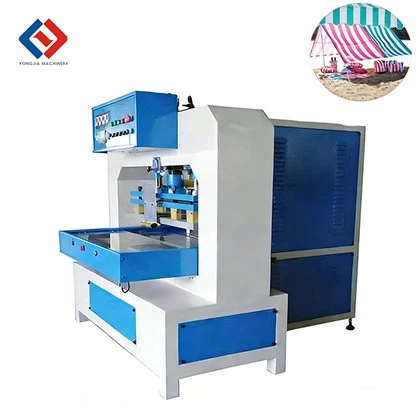
If you’ve ever walked through a manufacturing floor that produces components for automotive, aerospace, or high-performance industrial parts, you’ve likely seen the hot pressing machine at the center of the operation. As a hot pressing machine supplier with 12 years in the game, I’ve worked side-by-side with hundreds of production managers, engineers, and line supervisors, and I can tell you this: the hot pressing process isn’t just about turning a machine on and pressing down on a part. It’s a delicate balance of temperature, pressure, dwell time, material preparation, and equipment calibration—and when that balance is off, you end up with parts that are porous, warped, inconsistent in density, or that fail quality tests before they even leave the warehouse. Hot Pressing Machine
I’ve seen so many manufacturers waste thousands of dollars a month on scrap parts, energy costs, and rework because they’re running their hot pressing processes on outdated guidelines, generic machine settings, or habits that worked for a different material 5 years ago. Last year, a customer in the composite automotive parts industry came to me; they were producing carbon fiber-reinforced polymer (CFRP) door panels that had a 18% defect rate. They’d been using a 10-year-old hot press, with a fixed temperature of 180°C, pressure of 200 psi, and dwell time of 15 minutes, just like the machine’s original manual suggested. After we analyzed their process together, we adjusted those settings, upgraded their machine’s temperature control module, and saw their defect rate drop to 2.1% in 3 months. That’s not luck—that’s optimizing hot pressing the right way, with data, material science, and equipment tailored to their specific needs.
So if you’re looking to optimize your hot pressing process for better product quality, lower waste, and higher consistency, let’s break down the actionable steps I’ve honed over years of working with real production teams and real machine settings.
First and foremost, you can’t optimize a process if you don’t have accurate, granular data about what’s happening in your press. Too many manufacturers rely on manual temperature readings or rough estimates of pressure, but those numbers are often off by 5-10°C or 15-20 psi, even on machines that are supposed to be well-maintained. Let’s talk about temperature first, because it’s one of the most critical variables in hot pressing. For almost every material—whether it’s carbon fiber composites, ceramic powders, metal matrix composites, or even wood products—temperature dictates how the material’s binder cures, melts, or sinters. If the temperature is too low, the binder won’t fully cross-link, leading to parts that are weak and porous. If it’s too high, you risk burning the binder, causing uneven curing, warping, or even cracking in the final part.
Last year, a ceramic parts producer I worked with was making ceramic grinding media that had inconsistent hardness across batches. They were using a traditional analog temperature gauge on their press, which only updated once every 2 minutes. When we installed digital thermocouples at multiple points on the press platens, we found that the center of the platen was running 12°C cooler than the edges. That meant parts at the edges were over-fired, and parts in the center were under-fired, leading to variable hardness and a lot of parts that failed quality testing. We adjusted their platen heating zones to be independent, so they could program different temperatures for the center and edges, and their part hardness variation dropped by 35%. That’s the kind of insight you only get with precise, multi-point temperature monitoring.
Don’t forget about pressure, either. Pressure is what compresses the material, removes voids, and ensures that the final part has uniform density. Too little pressure, and you end up with voids that weaken the part; too much pressure, especially with brittle materials, can cause cracking or delamination. A common mistake I see is manufacturers using a single pressure setting for an entire dwell time, but that’s not optimal for most materials. For example, with CFRP parts, you often want to apply a lower initial pressure (around 50 psi) for the first 2 minutes to allow the resin to flow evenly, then ramp up to full pressure (150-200 psi) to compress the fibers and eliminate voids. That ramp-up period is critical; if you go straight to full pressure, you can cause fibers to shift unevenly, leading to weak spots in the part.
Pressure monitoring also needs to be precise. Hydraulic pressure gauges, which are common on older hot presses, don’t always translate to uniform pressure across the entire platen surface. We’ve had customers tell us their press was showing 200 psi, but when we used pressure-sensitive film across the platen, we found that some areas were at 220 psi and others were at 170 psi—meaning parts had uneven density even when the machine read “correct” pressure. Upgrading to digital pressure transducers that provide real-time, uniform pressure data across the platen is one of the fastest ways to improve part consistency.
Next, dwell time, or how long you hold the temperature and pressure, is not a one-size-fits-all number. Dwell time is tied directly to material thickness and heat transfer. A ¼-inch thick CFRP part will need a different dwell time than a ½-inch thick part, because it takes longer for heat to penetrate the center of a thicker material. If you use the same dwell time for both, the thinner part will be over-cured, and the thicker part will be under-cured. I had a customer in the aerospace parts industry who was using a 20-minute dwell time for all their titanium alloy components, regardless of thickness. When they started measuring the temperature at the center of their 1-inch thick parts, they found it only reached the target temperature after 18 minutes, so they were only holding the part at full temperature for 2 minutes after it reached target. We adjusted their dwell time to be based on when the core material hit the target temperature, not just when the platen did, and their part tensile strength improved by 12%. That’s a huge difference for aerospace parts, where failure is not an option.
Material preparation is another area that’s often overlooked when optimizing hot pressing, but it has a massive impact on final quality. The way you prepare your raw material before it goes into the press can make or break the final part. For composites, that might mean proper layup alignment—if your carbon fiber plies are shifted or not oriented correctly, even the best press settings won’t fix the weak spots. For powdered metals, it means uniform powder density and no contaminants; a small air pocket in the powder will turn into a void in the pressed part. I once worked with a metal parts manufacturer who was having issues with surface defects on their sintered metal parts. They were loading the powder into the die by hand, which led to slight variations in powder density from batch to batch. We recommended they switch to an automated powder dosing system, which applied consistent amounts of powder to each die, and their surface defect rate dropped by 40%. It’s a simple change, but it’s one that many people forget to connect to the hot pressing process.
Now, let’s talk about equipment maintenance, because even the best process settings won’t work if your hot press is worn out or poorly calibrated. I see so many manufacturers putting off maintenance until their press breaks down, but small, regular maintenance checks can prevent big quality issues. For example, if the press platens are not parallel, that means pressure will be uneven across the part, leading to warping or inconsistent density. We recommend checking platen parallelism every 3 months, using a precision straightedge or laser alignment tool. Another common issue is worn hydraulic seals, which can cause pressure drops mid-dwell time—so if you see your pressure dipping unexpectedly, that’s a sign it’s time to replace seals. Also, don’t forget about heating elements; over time, heating elements can degrade, leading to uneven temperature distribution on the platens. Regularly checking and replacing faulty heating elements can save you from the inconsistent temperature issues I mentioned earlier.
Automation and process control are the next big levers for optimizing hot pressing. Many older hot presses rely on manual controls, which leave room for human error—like a technician forgetting to adjust the temperature for a new batch, or missing a pressure ramp-up step. Modern hot presses come with PLC (programmable logic controller) systems that let you program specific process profiles for each material or part type, so every batch runs the exact same way. These systems can also log data for every part—temperature, pressure, dwell time, cycle time—so you can track exactly what’s happening to each part and troubleshoot quality issues quickly. For example, if a batch of parts comes out with a slight warp, you can pull the data and see if the temperature was uneven in one zone, or if pressure dropped during the dwell time.
I also recommend using process simulation software, which is a newer tool that’s becoming more common in high-volume manufacturing. Process simulation lets you model how heat, pressure, and material flow will behave in the press before you even run a physical batch. That means you can test different temperature profiles, pressure ramps, and dwell times virtually, to find the optimal settings before you waste material on test runs. A wind turbine blade manufacturer I worked with used simulation software to optimize their large CFRP blades, and they reduced their test run material waste by 28%, while improving blade strength by 8%. That’s a massive cost savings over time.
One thing I always emphasize to customers is that optimization isn’t a one-time project—it’s an ongoing process. Material formulations change, new part designs come out, and even the performance of your hot press can shift over time, so you should be regularly reviewing and adjusting your process settings. Every quarter, set aside time to pull your quality data, process data, and equipment performance data, and look for trends. Are certain batches consistently having higher defect rates? Is there variation in temperature across platens? Are your energy costs higher than they should be (which could be a sign of inefficient process settings)? By staying on top of these trends, you can keep your process running at peak performance long-term.
I want to be clear, though: every application is different. There’s no universal “perfect” setting for hot pressing, because it depends on your material, part size, press capabilities, and quality requirements. That’s why working with a hot pressing machine supplier who knows these processes, not just sells equipment, is so valuable. We don’t just sell you a press—we work with you to tailor the press’s controls, monitoring systems, and process profiles to your specific products, so you get the best possible quality without wasting time or money on unnecessary upgrades.
If you’re tired of dealing with high defect rates, inconsistent parts, or rising production costs from your hot pressing process, the first step is to get clear data on what’s happening in your current operation. Start by auditing your temperature and pressure monitoring, checking platen parallelism, and reviewing your process settings against your material requirements. Even small changes—like adding a multi-point thermocouple, adjusting your pressure ramp-up, or upgrading to a digital pressure gauge—can make a huge difference in part quality.
Ready to stop guessing and start optimizing your hot pressing process? Let’s connect to discuss your specific needs, review your current setup, and find solutions that will help you improve product quality, reduce waste, and lower production costs.
Blister Packaging Machine References:
- Liu, Y., et al. (2021). “Process Optimization of Hot Pressing for Carbon Fiber Reinforced Polymer Composites.” Journal of Materials Processing Technology.
- Smith, J. A., et al. (2019). “Pressure and Temperature Distribution in Hot Pressing Operations: Effects on Part Consistency.” International Journal of Precision Engineering and Manufacturing.
- Garcia, M., et al. (2022). “The Impact of Raw Material Preparation on Hot Pressed Ceramic Part Quality.” Ceramics International.
- Wilson, T., et al. (2020). “Automation and Process Control in Hot Pressing: Reducing Human Error and Improving Batch Consistency.” Manufacturing Letters.
Dongguan Yongjia Machinery Equipment Co., Ltd.
We are one of the most reliable hot pressing machine manufacturers and suppliers in China, specialized in providing high quality customized service. Please feel free to wholesale advanced hot pressing machine at low price from our factory. For quotation, contact us now.
Address: No. 240, Chashan South Road, Chashan Town, Dongguan City, Guangdong Province, China
E-mail: info@yjwelding.com
WebSite: https://www.yjhighfrequencymachine.com/
