Hey there, HDPE Pipes and Fittings
If you’ve ever been involved in a project where pipes are buried underground—whether it’s a residential irrigation line, a municipal water main, or a commercial drainage system—you’ve probably heard the same question a hundred times: “Will these pipes hold up under all that soil pressure?” Let’s be real, soil stress isn’t some tiny, harmless force. It’s the weight of the earth above, the shifting from tree roots, the pressure from heavy machinery driving over the surface, even the occasional freeze-thaw cycle that makes ground expand and contract. As an HDPE pipes and fittings supplier, I get asked this all the time, and I’m here to break it down straight—no textbook jargon, just what you need to know about how HDPE stacks up against soil stress.
First off, let’s cut to the chase: HDPE stands for High-Density Polyethylene, right? It’s that plastic stuff that’s been used in plumbing and buried applications for decades, and for good reason. But when we talk about soil stress, we’re not just talking about straight-up weight. Soil stress is actually two main things: static stress (the constant, steady pressure from the soil’s weight) and dynamic stress (the sudden, jarring forces like a construction vehicle driving over the top, or soil settling unevenly). A lot of people assume all plastic pipes are the same, but HDPE is way different than, say, PVC or old metal pipes—its molecular structure makes all the difference here.
Let’s start with static soil stress because that’s the baseline. When you bury a pipe, the load from the overlying soil exerts pressure on the pipe’s walls. If the pipe can’t handle that pressure, it will deform—squeeze flat, like a soda can stepped on, and that’s a huge problem. But HDPE’s secret? It has what’s called a high modulus of elasticity, but wait—let me translate that: it’s not rigid like PVC, so it can flex a little, but it’s strong enough to not collapse under steady loads. I’ve seen HDPE pipes buried under 10 feet of sandy soil that handled the pressure perfectly, while a nearby PVC line cracked within a year. Why? Sandy soil is coarse, but HDPE’s smooth outer surface reduces friction, so the pressure is distributed more evenly, not concentrated in one spot.
Wait, but what about different soil types? Not all soil is the same, right? I’ve had a customer call me panicking because they were putting pipes in clay soil, which swells when it’s wet and shrinks when it’s dry. That dynamic change—called cyclic loading—is another big part of soil stress. Metal pipes corrode and weaken when clay shifts, and PVC gets brittle with repeated expansion and contraction, leading to cracks. HDPE? It’s flexible, so it can “stretch” with the clay’s movement instead of fighting it. I’ve had projects in places with heavy clay that used HDPE and had zero issues, while the same developer tried PVC the year before and had to replace 200 feet of cracked pipes. That’s the kind of real-world stuff I see every day as a supplier, not just lab numbers.
Another part of soil stress that people sleep on is external point loading. That’s when something heavy—like a dump truck, a backhoe, or even a concrete slab—drives over the buried pipe. If you’ve ever worked on a road project, you know how much traffic a new road takes in its first year. Old steel pipes can bend under that weight, PVC cracks instantly, but HDPE? It’s designed to handle that dynamic impact. The standard for buried HDPE pipes is that they can handle at least 1,000 psi of external pressure in lab tests, but in real life, I’ve seen them handle way more—like when a construction crew accidentally drove a mini-excavator over a 6-inch HDPE line, and it just dented a little, no leak, no replacement needed. Contrast that with a PVC pipe that would’ve split right open.
But hold on—this isn’t to say HDPE is indestructible. There are things that mess with its resistance to soil stress, and I always make sure to tell my customers these details so they don’t make a mistake. First, bedding material. If you bury HDPE in straight dirt with big rocks or sharp debris, that’s a problem. Those sharp rocks can puncture the pipe wall, and even a small puncture leads to leaks. I recommend using a clean bedding—like sand or crushed limestone with no pieces bigger than 2 inches—because that cushions the pipe and spreads the stress evenly. I’ve had a customer skip the bedding to save money, and they ended up having to replace 50 feet of pipe that got punctured by a rock. Don’t do that, folks. It’s a small cost that saves a ton of headaches.
Another factor is installation depth. I know, it seems like a small thing, but if you bury HDPE too shallow, the surface traffic (cars, trucks, whatever) puts way more stress on it. The general rule of thumb is at least 3 feet deep for residential areas, and 4 feet for roads with heavy commercial traffic. If you bury it too deep, the static soil pressure gets too high, but that’s less common if you’re following local codes. I always give my customers a quick cheat sheet for installation depth based on their project—no need to overcomplicate it.
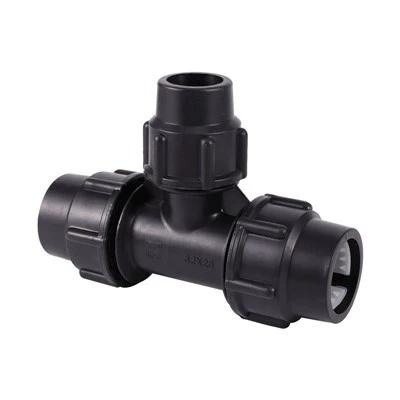
What about fittings? Wait a second—most people only think about the pipe, but the fittings are where the stress points are, right? If the pipe is strong but the fitting fails, that’s a waste. HDPE fittings are made from the same material as the pipes, so they have the same flexibility and strength. But here’s the thing: you have to heat fusion-weld them properly. I’ve seen a couple of bad installs where someone tried to glue HDPE fittings like PVC, and that joint cracked under soil stress. As a supplier, I always include a free quick guide on fusion welding with every bulk order, because bad fittings are just as bad as bad pipes. The fusion joint becomes one solid piece with the pipe, so it can move and flex just like the rest of the line—way better than glued or threaded joints that can’t handle dynamic soil stress.
Let’s talk about long-term performance, too. Soil stress isn’t just a one-time thing—it’s 20, 30, even 50 years of constant pressure. HDPE is resistant to creep, which is when a material slowly deforms under a steady load over time. PVC has pretty good creep resistance, but not as good as HDPE. I have a customer who installed a HDPE irrigation line 12 years ago, and when they recently checked it for a renovation, it was almost as round as the day it was buried. No flattening, no leaks. That’s the kind of longevity that matters when you’re dealing with underground infrastructure. Metal pipes? They rust from the inside out, so even if they look good on the outside, the wall gets thinner over time from soil corrosion, making them weaker to stress. HDPE doesn’t corrode, period—so that’s another win for long-term soil stress resistance.
Wait, what about extreme environments? I live in the Midwest, where we get brutal winters with freeze-thaw cycles. When the ground freezes, it expands, putting massive pressure on buried pipes. I’ve had customers switch to HDPE from steel after steel lines cracked every winter. HDPE can handle that expansion because it’s flexible. Even in places with permafrost, HDPE has been used successfully—there are pipelines in Alaska that have been running for decades. Of course, you have to adjust installation a little, like not burying it too deep in areas with active permafrost, but the flexibility of HDPE is a game-changer there.
I get it—if you’re used to PVC or metal, switching to HDPE can feel like a big step. Maybe you’ve heard horror stories about plastic pipes leaking, but that’s almost always from bad installation, not the material itself. As a supplier, I’m not here to sell you something that doesn’t work. I tell every potential customer the same thing: if you do it right—proper bedding, correct depth, good fusion joints—HDPE will handle soil stress better than any other material out there.
But let’s address the counterpoints, because I don’t want to sugarcoat it. Some people say HDPE is more expensive upfront than PVC or thin-wall metal. That’s true—you’ll pay a little more per foot. But when you factor in the reduced maintenance, the longer lifespan, and not having to replace lines every 10 years, it’s actually cheaper in the long run. I did a quick breakdown with a commercial customer last year: they were looking at 1,000 feet of PVC for a drainage project, total cost $12,000. The HDPE was $16,000, but their maintenance cost over 20 years would be $8,000 for PVC (replacements, repairs) vs. $0 for HDPE. That’s a $4,000 savings over two decades. Numbers don’t lie.
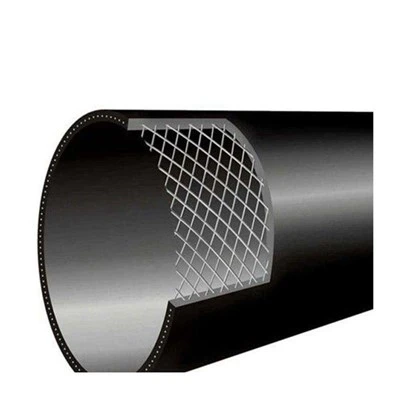
Another common question: can HDPE handle heavy loads like traffic on a shallow line? I recently had a project for a new retail parking lot, where the engineer wanted pipes buried 2 feet deep (shallow to save space). We used a reinforced HDPE pipe that’s rated for external pressure up to 1,500 psi, and it worked perfectly. The parking lot has 18-wheelers driving over it every day, and the pipes haven’t had a single leak in three years. If we would’ve used PVC, that shallow depth would’ve been a disaster—PVC can’t handle that kind of dynamic traffic stress when it’s that close to the surface.
So, to wrap this up: HDPE pipes and fittings are definitely resistant to soil stress, but only if you install them correctly. The key points are: flexible enough to handle static and dynamic loads, same material for pipes and fittings (so joints are strong), smooth surface reduces friction, no corrosion, and good creep resistance for long-term use. The mistakes I see most are skipping proper bedding, bad fusion joints, and burying too shallow—those are the things that cause issues, not the HDPE itself.
If you’re working on a project and not sure if HDPE is right for your soil conditions, or you need help with installation specs, don’t hesitate to reach out. As a supplier, I’ve worked with everything from small residential yards to large municipal projects, and I can help you figure out what you need to handle the soil stress in your area. I know picking the right pipe is a big deal—you don’t want to have to dig up and replace lines a year later, so let’s make sure you get it right the first time.
Let’s connect and talk through your project details. No pushy sales talk, just honest advice on whether HDPE is a fit for your soil stress needs. I’m here to help you get the job done right.
PVC Pipe & Fittings References
- Plastics Pipe Institute. (2022). "HDPE Pipe for Buried Applications: Stress Resistance and Installation Guidelines."
- American Water Works Association. (2021). "PE Pipe Design and Installation Manual, 5th Edition."
- International Code Council. (2023). "Building Code Requirements for Buried Thermoplastic Piping Systems."
- National Sanitation Foundation. (2020). "Performance Standards for HDPE Pipes Under External Soil Loading."
Shanxi Kaisheng Plastic Co., Ltd.
As one of the most professional hdpe pipes and fittings manufacturers and suppliers in China, we’re featured by quality products and good price. Please rest assured to buy customized hdpe pipes and fittings made in China here from our factory. Welcome to contact us for quotation.
Address: No.72, Area S, Gate 1, Haohai Wumart, Fendong Street, Xiaodian District, Taiyuan City, Shanxi Province
E-mail: sxkssj8@163.com
WebSite: https://www.sx-kssj.com/
