If you’ve ever stood inside a manufacturing plant where heavy machinery hums at full tilt, or watched a steel mill’s cooling towers cycle through extreme heat, you’ve probably noticed the small, unassuming parts that hold the entire operation together. Most people glance right past them, but for a supplier of industrial spacers, these components are the backbone of every safe, efficient production line. Today, I want to demystify one of our most critical offerings: high-temperature industrial spacers, and explain why they’re non-negotiable for industries that operate at the upper limits of thermal stress. Spacer
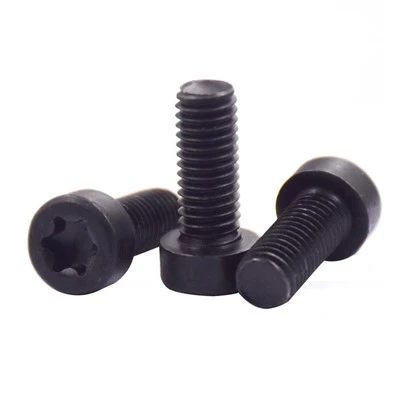
First, let’s get clear on what a spacer is, generally. A spacer is a simple, machined or molded part designed to create consistent gaps between two or more components. Their basic job sounds straightforward: maintain alignment, prevent unwanted contact, distribute pressure evenly, and reduce wear on adjacent parts. But when the environment reaches temperatures most plastics, metals, or ceramics can’t survive, that basic function becomes a high-stakes engineering challenge—that’s where high-temperature industrial spacers come in.
I’ve been supplying spacers for over 12 years, and I’ve seen first-hand how the wrong spacer choice can grind a production line to a halt. A client in the aerospace industry once tried to use a standard aluminum spacer in a jet engine’s turbine section; within 10 hours of operation, the aluminum softened and deformed at 1,200°F, causing the turbine blades to rub together, resulting in $2.7 million in damaged parts and three days of unplanned downtime. That’s not a minor delay—that’s a hit to revenue, a safety risk, and a problem we solved for them with a high-temperature ceramic spacer that’s still running flawlessly after 8 years. Stories like that drive home how specific high-temperature spacers are: they aren’t just “spacers that work in heat”—they’re engineered for precise temperature ranges, operating pressures, and chemical exposure levels that define their use case.
Let’s talk about what makes a spacer a “high-temperature” industrial grade. The definition varies by industry, but for our purposes, we classify any spacer rated for continuous operation above 500°F as high-temperature, with many of our products performing reliably at up to 3,000°F depending on their material. Unlike off-the-shelf spacers, which use low-cost polyethylene or nylon that melts at temperatures as low as 200°F, high-temperature spacers are built from materials selected for thermal stability, not just price. Common materials include advanced ceramics (alumina, zirconia, silicon carbide), high-performance alloys (Inconel, Hastelloy), and refractory composites that resist cracking, oxidation, and deformation when exposed to sustained or cyclic heat. A key detail most non-engineering clients don’t realize: cyclic heat (alternating hot and cold temperatures) is often more damaging than constant heat. A steel mill, for example, heats metal to 2,500°F then cools it to 100°F between batches, causing thermal expansion and contraction that can split a low-grade spacer. Our high-temperature spacers are engineered to withstand 10,000+ of these thermal cycles without failing, a spec most standard spacers can’t touch.
Now, let’s break down the core functions of high-temperature spacers, because their role is more nuanced than just “keeping parts apart.” First, thermal insulation is a big one. In glass manufacturing furnaces, where molten glass sits at 2,800°F, components like rollers, bearings, and structural frames need separation to prevent heat from transferring to parts that can’t survive those temperatures. A high-temperature ceramic spacer acts as a thermal barrier, stopping excess heat from seeping into a mill’s control system or drive motor—something a metal spacer can’t do, since metal is an excellent heat conductor. Second, electrical insulation is critical in industries like power generation and semiconductor manufacturing, where stray current can damage sensitive parts or create fire hazards. Our high-temperature polyimide spacers (rated for 500°F continuous) are used in wind turbine generators to separate electrical components, preventing arcing that would shut down a turbine mid-storm. Third, pressure distribution is key in heavy equipment like mining crushers, where tons of force are applied to rotating parts. A high-temperature alloy spacer distributes that load evenly across two metal components, preventing stress concentrations that would cause cracks or premature wear—a function that becomes even more important when high heat weakens surrounding metal parts. Fourth, corrosion resistance is non-negotiable in industries like chemical processing, where acidic or alkaline vapors mix with high heat. High-temperature Hastelloy spacers resist corrosion from sulfuric acid and hydrogen chloride, something standard steel spacers can’t handle, as they’d rust and break down in weeks.
Over my years in supply, I’ve worked across dozens of industries, and each has unique demands for high-temperature spacers. Let’s walk through the most common use cases to illustrate just how tailored these parts are. Aerospace and defense: In jet engines, rocket test stands, and hypersonic vehicle components, spacers need to withstand extreme transient heat—hypersonic craft can see surface temperatures of 3,000°F in seconds. We supply machined silicon carbide spacers for rocket engine test stands, where they separate combustion chamber bolts from structural casings, preventing thermal expansion from loosening critical fasteners. Aeronautical engineers also rely on our high-temperature phenolic spacers for cabin pressurization systems, where temperatures swing between -65°F and 500°F during flight. Next, metal and glass manufacturing: I mentioned steel mills and glass furnaces earlier, but high-temperature spacers here serve two separate roles—one inside the furnace (where they’re exposed to molten material) and outside (where they support structural components). For inner-furnace use, we offer alumina ceramic spacers that resist molten metal and glass adhesion; for outer structural parts, Inconel spacers that handle high heat and mechanical stress. A glass manufacturer in Toledo used to use steel spacers that warped after 6 months; our silicon nitride spacers last 5 years, cutting their spacer replacement costs by 80%. Third, power generation: Both fossil fuel and renewable power plants use high-temperature spacers, but for different needs. Fossil fuel plants need spacers for boiler systems, where temperatures hit 1,200°F; we supply ceramic-coated Inconel spacers here to resist oxidation from flue gases. Solar thermal plants, which use concentrated sunlight to heat fluid to 1,500°F, use high-temperature mica spacers to separate receiver tubes from support structures, preventing heat loss that would reduce energy efficiency. Fourth, semiconductor manufacturing: This is a fast-growing use case, and it’s one of the most demanding. Semiconductor fabs run chemical vapor deposition (CVD) chambers at 1,800°F, and even tiny amounts of contamination can ruin a $100,000 wafer. Our high-temperature quartz spacers are used in CVD chambers, as they’re chemically inert, don’t outgas, and maintain precise dimensions at high heat—critical for keeping wafers aligned during processing. Fifth, chemical processing: Refineries and pharmaceutical plants operate with volatile, high-temperature chemicals, so spacers need to resist both heat and corrosion. We supply PEEK (polyether ether ketone) spacers rated to 550°F for reactors processing pharmaceutical intermediates, as they don’t react with acids or bases and maintain dimensional stability even when exposed to corrosive vapors.
A common question I get from new clients is: “Can’t I just use a cheaper, off-the-shelf spacer and save money?” The short answer is almost always no. The initial cost of a high-temperature spacer might be 2–10 times higher than a standard one, but the long-term savings and safety benefits far outweigh that cost. Let’s do a quick example: A chemical plant needs 200 spacers for a reactor system. A standard nylon spacer costs $0.50 each, so $100 total, but they fail every 3 months, requiring 4 replacements a year, totaling $400 annually, plus $1,500 in labor to replace them and $5,000 in unplanned downtime losses. A high-temperature Hastelloy spacer costs $5 each, so $1,000 total, but they last 5 years, no replacements, no downtime. Over 5 years, the standard spacer costs $27,000, while the high-temperature spacer costs $1,000. That’s not a small difference. Another angle: regulatory compliance. Many industries, especially aerospace and power generation, require parts that meet strict standards (like AS9100 for aerospace, ISO 9001 for general manufacturing) to prevent safety hazards. Using a non-compliant spacer can lead to OSHA fines, production shutdowns, or even liability in the event of an accident. I’ve had clients come to me after a safety inspector flagged their standard spacers, and we helped them switch to compliant high-temperature spacers to get back in operation.
Another point I want to emphasize: high-temperature spacers aren’t one-size-fits-all. That’s why as a supplier, we don’t just keep a stock of pre-made spacers—we work with clients to custom-make them to their exact specs. I once worked with a small forging company that needed a spacer for a custom hydraulic press; their spacers had to be 0.125 inches thick, have a 0.5-inch center hole, and withstand 1,800°F while exposed to forge scale. Our team machined a custom silicon carbide spacer in 2 weeks, and it’s been working for 7 years. We also do bulk orders for large mill operations, as well as low-volume custom parts for aerospace and semiconductor clients who need small runs for prototype testing.
If you’re reading this and wondering whether your operation needs high-temperature spacers, ask yourself a few questions: Are you operating in temperatures above 500°F? Do you have parts that experience cyclic heating and cooling? Do you need thermal or electrical insulation in your components? Are you dealing with corrosive chemicals that could break down standard materials? If the answer is yes to any of these, a high-temperature spacer is likely a critical component you’re currently missing, or using the wrong version of.
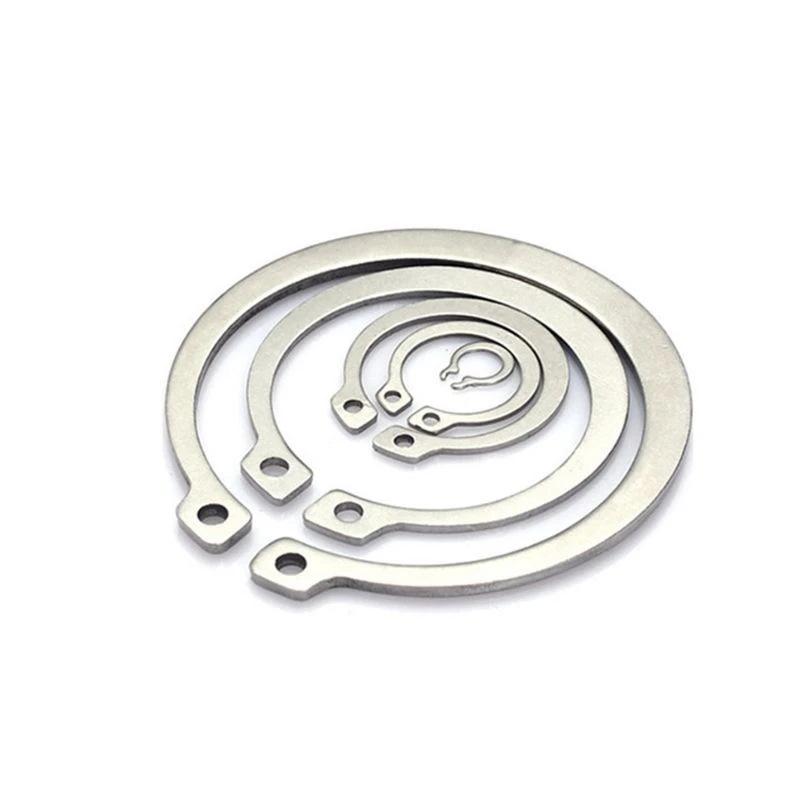
At the end of the day, industrial manufacturing is all about reliability. A production line that runs 24/7, with zero unplanned downtime, is what every business wants, and high-temperature spacers are a small but essential part of that. As a supplier, we don’t just sell parts—we solve problems, whether that’s extending the life of a client’s equipment, reducing maintenance costs, or ensuring their operations run safely and efficiently. If you’re looking for high-temperature spacers tailored to your industry and needs, we’re here to help you find the right solution for your application. Reach out to connect about your requirements, and we’ll provide a customized quote and technical guidance to ensure your spacers perform exactly as you need.
Sealing Screw References
- ASM International. (2007). Materials Selection and Design, Volume 2: Properties and Selection: Nonferrous Alloys and Special-Purpose Materials. ASM International.
- Engineering ToolBox. (2023). High Temperature Materials – Maximum Operating Temperatures. Engineering ToolBox.
- Semiconductor Engineering. (2022). CVD Chamber Materials and Wafer Processing. Semiconductor Engineering.
- NASA. (2019). Materials for Hypersonic Vehicle Thermal Protection Systems. NASA Technical Report.
- Chemical Processing Magazine. (2021). Corrosion-Resistant Materials for High-Temperature Reactors. Chemical Processing Media.
Huizhou Zeyao Hardware Products Co., Ltd.
Huizhou Zeyao Hardware Products Co., Ltd. is one of the most professional spacer manufacturers and suppliers in China, specialized in providing high quality products and service. We warmly welcome you to wholesale customized spacer made in China here from our factory.
Address: 1/F, Building A, Huifeng West Third Road No. 108, Chenjiang St., Zhongkai High-Tech District,Huizhou, Guangdong, China
E-mail: sales@hky-hardware.com
WebSite: https://www.zeyaohardware.com/
