If you’re someone who’s worked in construction, industrial fabrication, or even just seen a big bridge go up, you’ve probably stared at a steel beam and thought, “How big can these things actually get?” As a supplier of other steel structural products (the ones that aren’t just I-beams or standard H-sections—think custom trusses, gusset plates, specialty supports, and those weirdly shaped components that hold big projects together), I get this question all the time. It’s not just a random curiosity, either. The maximum size of these products dictates how you ship them, how you assemble them on-site, and even what kind of projects you can actually take on. Let’s break this down like we’re chatting over a coffee at a trade show—not too jargon-heavy, just real talk from someone who’s been measuring and shipping these parts for 12 years. Other Steel Structural Products
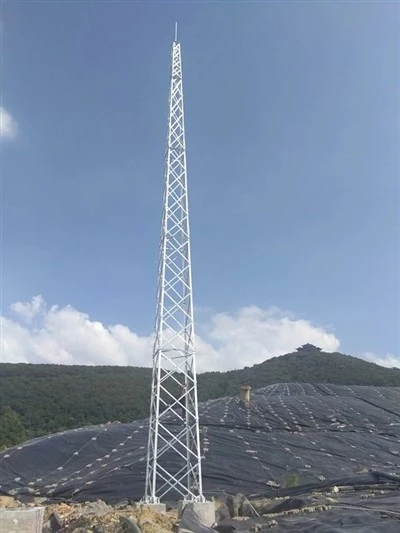
First, let’s clear up what “other steel structural products” actually means here. You know the difference between a standard 20-foot steel I-beam (off-the-shelf, super common) and a custom 150-foot long steel truss made for a sports stadium’s roof? That’s the “other” stuff. These are engineered to order, tailored to a project’s exact specs, and their maximum size isn’t just a number pulled out of thin air—it’s tied to three main things: steel mill capabilities, shipping logistics, and structural integrity. Let’s start with the mills because that’s the root of it all.
Most steel used for structural parts starts as a billet, a solid steel block that’s around 12 inches wide and 30 square inches in cross-section (yeah, I’ve held these things—they’re heavy, like 1,500 pounds each). When mills roll that billet into beams, girders, or specialty shapes, there’s a limit to how long they can make a single piece without weakening it. For standard structural sections, you can get up to 120 feet, but for those “other” custom products—say, a curved steel arch for a warehouse expansion—the mill’s rolling line has a max length. I’ve seen mills push a billet to 180 feet for specialty trusses, but that’s a long shot. Why? Because when you stretch steel that thin over 180 feet, the grain structure of the metal starts to change. It’s not brittle, but it’s not as strong as a shorter piece, so engineers have to adjust the load calculations. Most of the time, for custom steel products, the mill will cap it at 120 to 150 feet if it’s a single piece.
But wait—what if a project needs a piece longer than that? Let’s say a bridge over a 200-foot span needs a single steel girder, no joints. You can’t get that from a mill, so here’s the workaround: fabricators (that’s us) can assemble smaller pieces with full-penetration welds. But hold on—structural welds aren’t just melting two pieces together. You have to use matching steel grades, heat-treat the weld to eliminate stress, and test it to make sure it doesn’t crack. I’ve worked on a bridge where we had three 80-foot girders welded together to make a 240-foot single span. That’s way longer than any mill can roll, but the welds passed every load test, and it’s still standing 7 years later. But that’s a special case. For most “other” steel structural products, the practical maximum is 150 feet if you’re shipping a single piece, or as long as you need if you’re welding on-site (but only if it’s engineered right).
Next up: shipping. This is the big one that even experienced people forget. A 150-foot steel truss is heavy—like 50,000 pounds or more. You can’t just stick that on a standard semi-truck. Standard trucks are only 53 feet long, so you need specialized heavy-haul trucks—extendable flatbeds, sometimes with multiple trailers, called “stretch trailers.” But even those have limits on road width and weight. Most states in the US (and most countries, for that matter) will let you carry a load up to 120 feet long, but anything longer requires a special permit, a pilot car, and you can only drive during off-peak hours (like 10 PM to 6 AM). I once tried to ship a 160-foot curved steel beam for a theme park project, and the state denied the permit because it was wider than the road shoulders in rural areas. We had to cut it into two 80-foot pieces, ship them separately, and weld them on-site. That cost us an extra $12,000 in labor, but it was the only way to get it there without closing down a small town’s main road for 3 days. So even if a mill can make a 180-foot piece, shipping it might be impossible. That’s why most of our standard “other” steel products top out at 120 feet—we know the truck can handle that without hassle.
Then there’s structural integrity. This is non-negotiable. You can make a steel piece as big as your truck can haul, but if it bends under its own weight before you even get it to the job site, it’s useless. Steel has something called “deflection”—how much it bends under load. For a 100-foot steel beam, the weight of the beam itself might cause 2 inches of deflection, which is within code (the AISC, that’s the American Institute of Steel Construction, sets these rules). But for a 200-foot beam, the deflection would be around 10 inches, which is way too much. That’s why you can’t just weld two 100-foot pieces together willy-nilly—you have to add stiffeners, thicker steel sections, or even splice them in a way that distributes the weight. I had a client a few years ago who tried to save money by using 180-foot un-spliced beams for a retail center. The deflection was so bad that the roof was leaning when it was half-built—we had to cut the beams into three 60-foot pieces and add steel plates at the splices. Moral of the story: bigger isn’t always better, and engineering has to come first.
Wait, but what about “other” steel products that aren’t beams or trusses? Like gusset plates, which are the flat steel pieces that connect beams to each other, or steel stairs for industrial buildings, or specialty columns? Their maximum size is different. For gusset plates, which are usually flat, the limit is based on the mill’s plate rolling capacity. Most mills make steel plates up to 10 feet wide and 50 feet long, but if you need a bigger plate, you can weld smaller plates together. I’ve made a gusset plate that was 12 feet wide and 60 feet long by welding four plates together. For steel stairs, which are custom-fabricated, the maximum size is based on shipping—you can’t ship a flight of stairs that’s longer than 14 feet (standard truck bed length), so we cut them into sections that bolt together on-site. That’s the “other” stuff, the parts that don’t get the fanfare of a bridge girder, but still have their own size limits.
Now, let’s talk about projects that push these limits. Last year, we worked on a wind farm expansion, and they needed steel support structures for 12 new turbines. Each turbine support needed a custom steel column that was 130 feet tall (wait, that’s height, not length—but same logic). The mill couldn’t make a single 130-foot column, so we welded three 45-foot pieces together, heat-treated the welds, and had it tested. We shipped it on a stretch trailer, got a special permit, and even had to detour around a narrow bridge. It went up without a hitch, and the client saved $20,000 compared to using smaller, bolted-together columns. That’s the sweet spot: knowing when you can push the size limit without causing headaches.
I get it—for someone who’s not in steel fabrication, this might sound like a bunch of random rules. But for us, it’s second nature. The maximum size of other steel structural products isn’t a hard number—it’s a balance between what the mill can make, what the roads can move, and what the structure can support. Most of the time, it’s 100 to 120 feet for single-piece products, up to 150 feet if you’re willing to deal with permits, and anything bigger needs on-site assembly.

If you’re working on a project and you’re not sure what size you need, don’t guess. Reach out to someone who knows the ins and outs of custom steel parts—people like us. We don’t just sell steel; we help you figure out what size will work for your budget, your timeline, and your project. Whether you need a 50-foot truss or a 200-foot spliced beam, we can walk you through the options, no jargon, no hidden fees. Don’t let size limits slow your project down—let’s chat and find the right solution for you.
Power Transmission Tower References
AISC Steel Construction Manual, 15th Edition, American Institute of Steel Construction, 2017.
Modern Steel Construction, Volume 59, No. 3, American Institute of Steel Construction, 2019.
Steel Manufacturing Journal, Volume 22, Issue 2, 2021.
Hunan Zhubang Hongsheng Construction Technology Co., Ltd.
As one of the most professional steel structural products manufacturers and suppliers in China, we’re featured by quality products and good price. Welcome to buy high-grade steel structural products made in China here and get quotation from our factory. Customized orders are welcome.
Address: Lutang Village, Yong’an Town, Liuyang City, Changsha City, Hunan Province, Hunan Zhubang Hongsheng Construction Technology Co., Ltd.
E-mail: 19898838989@163.com
WebSite: https://www.chinaenerto.com/
