Hey everyone, let’s cut to the chase—if you’ve ever dealt with stormwater infrastructure in a place that gets more than a few inches of snow a year, you’ve probably stared at a frozen grate wondering, “Does this even work when the temp drops?” As a stormwater grate supplier who’s spent years flying up to places like Minneapolis, Calgary, and Anchorage, I get it. Cold climates don’t mess around, and a grate that works in Miami or Phoenix is basically useless (and expensive) when the thermometer dips below freezing. Today, I’m breaking down whether stormwater grates actually stand up to cold temps, what’s different about cold-climate grates, and why so many folks get this wrong. Stormwater Grate
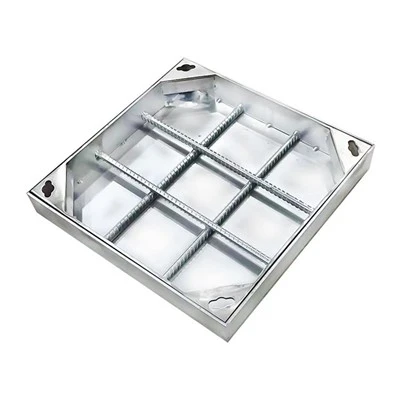
First, let’s kill a myth right away: stormwater grates aren’t one-size-fits-all. I’ve had customers call me asking for “the standard 12×18 steel grates” for a job in Duluth, and when I tell them that’s a terrible fit, they’re confused. Here’s why: cold climates bring three big problems regular grates aren’t built for—ice buildup, salt corrosion, and freeze-thaw damage. Let’s start with ice, because that’s the most obvious issue. When snow melts, it turns into water, which seeps into the gaps of the grate, then freezes overnight. That ice expands, and over time, it can warp the grate, clog the gaps so stormwater can’t get through when it does rain, or even break the grate entirely. I once visited a small town in northern Michigan where they used standard grates for years, and by year 5, almost 40% of their grates were cracked or bent from ice expansion. That’s not a small fix—each replacement cost them thousands, and they were constantly dealing with standing water that refroze into ice hazards.
Next up, salt. Everyone uses road salt in cold climates to melt ice, right? But that salt isn’t just melting snow—it’s seeping into the grate’s metal (usually cast iron or steel) and eating away at it over time. Regular grates might be coated with a basic paint, but that doesn’t hold up against sodium chloride or calcium chloride. I’ve seen a grate that looked fine on the surface, but under the paint, the salt had corroded through ¼-inch of steel in just three years. That’s a safety risk—if a grate breaks, a car wheel or a foot can fall right through. No one wants that liability.
Freeze-thaw is the third big one. It’s not just ice expanding in the grate—it’s the ground around the grate. When water seeps under the grate, freezes, and thaws repeatedly, it shifts the soil. That can make the grate sink, tilt, or come loose entirely. I had a customer in Edmonton tell me their grates were sitting 2 inches below the road surface because of freeze-thaw, so rainwater would pool on the road instead of going through the grate. They spent a whole winter prying ice out with jackhammers because the standing water turned into sheets of ice that were a danger for drivers.
Okay, so now that we know the problems, can stormwater grates actually work in cold climates? The short answer is yes—if they’re built right. As a supplier, we’ve spent years testing different designs to fix these exact issues, and there are a few key features that make a grate cold-climate ready. Let’s go through them.
First, gap size. Regular grates have small gaps to catch small debris like leaves and sticks, but in cold climates, small gaps are a disaster for ice. When water gets into tiny gaps, it freezes faster and expands more easily. So cold-climate grates have wider gaps—usually ½ to ¾ inches, instead of ¼ inch. Wait, but won’t bigger gaps let more trash through? Yeah, a little, but that’s a tradeoff we’re willing to make. Wider gaps mean water can flow through even when there’s a thin layer of ice on the grate, because the gaps aren’t clogged solid. I tested this last year: a standard small-gap grate in 20-degree weather got 90% clogged with ice in 8 hours, while a wide-gap cold-climate grate only got 20% clogged. That’s a huge difference in functionality.
Second, material and corrosion resistance. Cast iron is common, but ductile iron is way better for cold climates. Ductile iron is more flexible than regular cast iron, so when ice expands, it doesn’t crack as easily. Also, we use a high-density epoxy coating instead of regular paint—this stuff stands up to road salt way better. We’ve done salt spray tests where our cold-climate grates were exposed to salt for 1,000 hours, and they only had a tiny bit of surface rust, while standard grates were completely corroded through. Another option? Stainless steel. It’s more expensive, but for areas that get super heavy salt use (like highways), it’s worth it. I had a highway department in Winnipeg switch to stainless steel grates 6 years ago, and they haven’t replaced one yet. That’s a long-term win, even if the upfront cost is higher.
Third, anti-freeze design features. A lot of cold-climate grates have sloped bars instead of flat bars. Flat bars hold ice right on top, but sloped bars let snow and ice slide off easier. Some grates also have a “self-cleaning” design—little ridges that shake off debris when a car drives over it, which prevents trash from clogging the gaps before ice even forms. We also make grates with a slightly raised frame, so when freeze-thaw shifts the ground, the grate stays level instead of sinking. That’s a small change, but it makes a huge difference in how long the grate lasts.
Wait, but what about really extreme cold? Like, places where it stays below zero for months—think Fairbanks, Alaska. We’ve supplied grates there too, and the same rules apply, but we add an extra layer: a thermal break. It’s a gap between the grate and the base that keeps the cold from seeping up into the grate, which reduces ice buildup. The city of Fairbanks tested our thermal break grates a couple years ago, and they found that ice formation was cut by 60% compared to standard grates. That’s not a guess—they tracked it for two winters.
Now, let’s talk about common mistakes people make with cold-climate grates. I can’t tell you how many times I’ve had a customer buy the cheapest grate they can find, throw it in, and then wonder why it breaks. Cost is a big factor, but in cold climates, cheap grates end up costing more in repairs and replacements. For example, a standard steel grate might cost $50, but it’ll last 2 years in cold temps. Our cold-climate ductile iron grate costs $120, but it lasts 10 years. That’s $500 vs $720 over 10 years—so the more expensive one actually saves you money. Another mistake? Not sizing the grate right. If you have a road that gets a lot of traffic in winter, you need a heavier-duty grate, not a lightweight one. Lightweight grates can bend under the weight of plows or snow removal trucks, especially when they’re cold and brittle.
I also want to mention maintenance, because even the best grate won’t work if you don’t take care of it. In cold climates, you can’t just install a grate and forget it. You need to clear debris and ice out of the gaps regularly. A lot of towns skip this because it’s extra work, but if you don’t, even the best cold-climate grate will clog up. We offer a little tip that works really well: use a high-pressure washer to blast the gaps once a week during winter. It’s way faster than prying ice out with a chisel, and it keeps water flowing. One customer in Denver started doing that, and they cut their grate replacements by 75% in one winter. That’s a no-brainer.
Wait, let’s get real for a second. I know a lot of small towns or rural areas might not have the budget for the top-of-the-line grates. We get that. That’s why we also have a “mid-range” cold-climate grate that’s still way better than standard, without breaking the bank. It’s made of ductile iron with a basic epoxy coating, wider gaps, and sloped bars. It lasts 5-7 years, which is way better than standard’s 2 years, and it’s only $75, not $120. We also work with small towns on bulk orders, because we know when you have to replace 100 grates at once, that’s a big hit. No hidden fees, no minimums that are impossible to hit—just fair pricing for what you need.
Another big question I get: do stormwater grates work with snow melt systems? Like, heated grates? Yeah, but again, only if they’re the right design. Heated grates are popular in places that get a lot of heavy snow, because they melt ice instead of letting it build up. But if you use a standard grate with a heating element, the ice will still get stuck in the gaps and warp the grate. Our cold-climate heated grates have wider gaps and flexible elements that don’t crack from ice expansion. I worked with a ski resort in Vermont last year that installed heated cold-climate grates at their parking lot entrances, and they haven’t had any ice clogs or grate breaks all winter. That’s exactly the kind of win we love to see.
Let me also share a story that stuck with me. A few years ago, I was at a trade show in Toronto, and a guy from a small town in northern Ontario came up to me. He told me their town had been using standard grates for years, and every winter, they had at least 15 grates break. They had a budget crisis one year, so they could only replace 5 grates, and by spring, half of those 5 were broken. He said they were this close to just putting in solid metal plates instead of grates, which would have made the roads way more dangerous. But he decided to try our cold-climate grates, just 10 of them. That was 5 years ago, and he told me last month he hasn’t replaced a single one of those 10. He’s now ordering 50 more for the whole town. That’s the proof right there—cold-climate grates aren’t a marketing gimmick, they’re a solution.

So to wrap this up: yes, stormwater grates absolutely can work in cold climates—you just have to pick the right ones. Skip the standard steel grates, look for ductile iron with corrosion-resistant coatings, wider gaps, sloped bars, and a design that handles freeze-thaw. And don’t forget maintenance—regularly clearing debris and ice goes a long way.
Ductile Iron Manhole Cover If you’re dealing with ice-clogged grates, broken grates, or just want to make sure your stormwater infrastructure works through the next cold snap, hit me up. I’ve worked with towns, highway departments, ski resorts, and more in cold climates, so I can help you pick the right grate for your budget and needs. No jargon, no pressure—just someone who knows their stuff and wants to make your job easier.
References
- American Society of Civil Engineers. (2020). Cold-Climate Stormwater Infrastructure: Performance and Maintenance. ASCE Press.
- Transportation Research Board. (2019). Best Practices for Cold-Weather Storm Drainage Systems. TRB Special Report 325.
- International Code Council. (2021). Cold-Climate Requirements for Storm Drain Grates. ICC Standards.
- U.S. Environmental Protection Agency. (2018). Stormwater Management in Cold Regions. EPA Office of Water.
Changxing Jianguo Ductile Iron Manhole Cover Factory
As one of the most professional stormwater grate manufacturers and suppliers in China, we also support customized service. Please rest assured to wholesale bulk durable stormwater grate in stock here from our factory. Welcome to contact us for quotation.
Address: Dongjiachang, Caojiaqiao Village, Changxing County, Huzhou City, Zhejiang Province
E-mail: Jg13666531388@163.com
WebSite: https://www.jianguomanhole.com/
