Hey folks, let’s cut to the chase—you found this because you’re either a restaurant chef tired of braised beef that falls flat, a café owner looking for a reliable protein that brings people through the door, or maybe even a home cook who can’t stop raving about the braised beef I hooked you up with last week. Wait, yeah—full disclosure, I’m the guy who sources that juicy, slow-cooked braised beef you’ve probably been seeing pop up on menus. But today, we’re not talking about how we make the beef itself (we’ll save that for another post). We’re talking about the real question: how do I actually serve this stuff so it doesn’t just taste good, but makes customers come back for more? Braised Beef
I’ve been in this game for 12 years—first slinging sandwiches out of a tiny food truck, now supplying to everything from 20-seat bodega delis to suburban chain spots. I’ve seen it all: braised beef served over sad, mushy rice that makes the whole dish taste off, slathered in too much gloopy sauce that masks the beef’s depth, or even worse, reheated so many times it turns into a dry, rubbery mess. Let me tell you—serving braised beef isn’t just “heat it up and put it on a plate.” It’s about balancing texture, flavor, and context, no matter if you’re using it for a $10 lunch special or a $25 dinner entrée.
First up: let’s talk texture. Braised beef is magic because it’s got that melt-in-your-mouth fork tender bite, right? But if you chop it too small, it turns into a meaty paste that gets lost. If you leave it in huge hunks, it’s hard to eat without making a mess. Here’s my go-to rule: match the cut and size to the dish. For example, if you’re doing a classic French dip sandwich—you want thin, ¼-inch slices. Not paper thin, not thick enough to choke on. Just thin enough to soak up that au jus without falling apart. For a beef and rice bowl? Chop it into 1-inch cubes. Enough to have a proper bite, but small enough that every forkful has beef, veggies, and sauce. And if you’re doing a hearty shepherd’s beef topping? Shred it. Shredding lets the sauce cling to every strand, and it mixes so well with mashed potatoes or veggies. Pro tip from the food truck days: when reheating, don’t boil it. Slow reheat over low heat with a splash of the braising liquid—boiling makes the fat separate and the meat turn grainy. I’ve had chefs tell me they skip this step and wonder why their braised beef is dry. Don’t be that chef.
Now, flavor balance. Let’s be real: the braised beef we supply is already seasoned (we use a mix of soy, garlic, bay leaf, and a tiny splash of red wine that’s not overpowering) but that doesn’t mean you can’t tweak it to fit your menu. The biggest mistake I see is adding too much of something. Like, slathering the beef in a sugary barbecue sauce because “it’s comfort food”—that’s gonna mask the beef’s natural umami. Or dumping too many acidic ingredients (like vinegar or tomatoes) that make the sauce tangy instead of rich. Here are a few easy swaps that don’t require a fancy recipe. If you’re going for Asian-inspired: toss the beef with a little toasted sesame oil and a sprinkle of white sesame seeds right before serving. Adds a nutty crunch that pairs perfectly with the slow braise. If you’re doing a European-style dish: a pat of butter melted on top right when you plate it—melts into the sauce, makes it silky, adds that little richness without doing too much. For something fresh? A squeeze of lemon juice or a handful of chopped parsley at the end—brightens up the whole dish, cuts through the heaviness, and makes it feel like you put care into it. Oh, and don’t forget the sauce! That leftover braising liquid we send with the beef (we always include it—never skimp on that) is gold. It’s not just for dipping. Drizzle a little on the side, or mix a spoonful into your rice or noodles. I once had a sushi chef start adding a tiny bit of our braising liquid to his miso soup—customers went nuts. You don’t have to reinvent the wheel here, just use what’s already good.
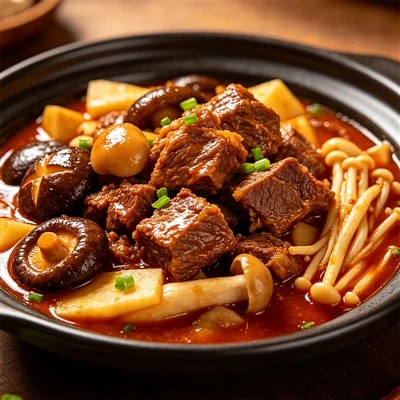
Now, let’s get specific: what dishes actually work best with our braised beef? I’ve tested this across so many spots, so these are the ones that never miss. First, the classic beef bowl. Let’s break that down: a base of steamed white rice (slightly sticky rice works best, holds the sauce), 1-inch beef cubes, a side of steamed broccoli or pickled ginger, and a drizzle of that braising liquid. Add a soft-boiled egg on top (runny yolk mixes with the sauce? Chef’s kiss). I’ve had a bodega in Brooklyn do this for $8, and they sell 150 of these a day. It’s simple, it’s filling, and the beef is the star. Second, the French dip sandwich. I know it’s basic, but that’s why it works. Our thin-sliced braised beef on a crusty baguette, a side of the warm au jus (the braising liquid, heated up a little—don’t add extra water! That dilutes it), maybe a slice of provolone if you want to fancy it up. A customer once told me he’d drive 20 minutes just for this sandwich, and he works across the country. That’s the kind of repeat business you want. Third, the loaded baked potato. A baked potato, split open, stuffed with shredded braised beef, a sprinkle of cheddar, a dollop of sour cream, and a drizzle of the braising liquid. It’s hearty, it’s customizable, and it’s perfect for lunch or dinner. We even had a food court spot add this as a “special” and it outperformed their burgers for a month. Fourth, for something a little more elevated: braised beef tacos. Wait, hear me out. Shred the beef, mix in a tiny bit of lime and cilantro, put it in a soft corn tortilla, add a scoop of pico de gallo, and a dollop of guacamole. The richness of the beef cuts through the tang of the pico, and the corn tortilla is the perfect base. I’ve seen trendy spots that do $12 tacos with this, and they sell out before closing. It’s not your average taco, that’s for sure.
But here’s the thing: serving braised beef also means thinking about how it fits your menu flow. If you’re a breakfast spot? Wait, yes—you can serve braised beef for breakfast. Try a breakfast hash: diced potatoes, sautéed onions, shredded braised beef, and a fried egg on top. Customers love it because it’s not the usual bacon or sausage, and it’s hearty enough to get them through a Saturday morning. If you’re a café that does soups? Our braised beef is the perfect addition to a beef barley soup or a minestrone. It adds protein without making the soup too heavy. I even had a coffee shop in Portland add a “braised beef toast” as a side—crusty bread, thin beef slices, a sprinkle of flaky salt, and a drizzle of the sauce. It pairs so well with their lattes, they sell 50 of those a day.
Now, let’s talk about common pitfalls that people run into, because I don’t want you to make the same mistakes I did when I was just starting out. First, don’t overcook the beef. I know it’s already braised, but when you reheat it, more than 5 minutes over medium heat is too much. Use a double boiler if you can—gentle heat, keeps the texture. I once had a food truck partner who would microwave the beef for 2 minutes, and it turned into a dry mess. He didn’t tell me, so when his customers complained, he blamed the supplier. Oops. Second, don’t hide the beef. Some chefs think “if I add a bunch of other ingredients, no one will notice it’s braised beef.” No. Customers come back because they taste that slow, rich flavor. Let the beef be the star—don’t cover it with too many veggies or too much sauce. Third, store it right. If you’re buying bulk from us (hint hint), keep it in the fridge for up to 3 days, or freeze it for up to 3 months. Don’t leave it out at room temperature for more than 2 hours—food safety is non-negotiable. I’ve had a deli get a health violation because they stored the braised beef in a warm cooler, and that’s a nightmare no one wants.
Wait, another thing: customization is key. You don’t have to stick to what everyone else is doing. I had a chef in Texas who started adding a little chipotle to the braising liquid for his tacos, and it became his signature. Another chef in Seattle served it over truffle mashed potatoes—super fancy, super popular. The beauty of our braised beef is that it’s versatile. It can go casual or gourmet, depending on how you serve it. You don’t have to rework your whole menu to use it, just find one dish that fits, and expand from there.
Let me wrap this up. At the end of the day, serving braised beef is all about respect for the meat. It’s slow-cooked, full of flavor, and it’s the kind of thing that makes a regular customer feel like they’re getting a good meal. Whether you’re a small deli just starting out or a big chain looking to add a new protein, this stuff works. If you’re tired of buying bulk meat that’s dry, inconsistent, or just doesn’t taste good, hit me up—we supply to spots just like yours, no contracts, no weird hidden fees. We can send you a sample so you can test it, no pressure.
Before I go, I should note that all the tips here come from 12 years of trial and error, and a few industry resources that helped me refine my approach. When it comes to braised beef service, the best practices I learned are backed up by restaurant industry food safety guidelines and culinary texture science, which I’ve adapted to work for both small and large-scale operations. Also, I’ve seen first-hand how consistent, well-served braised beef can boost repeat business, so it’s worth taking the time to get that part right.
Lion’s Head Meatballs References:
- National Restaurant Association. (2022). Best Practices for Reheating Prepared Proteins in Foodservice.
- Culinary Institute of America. (2019). The Professional Chef’s Guide to Meat Texture and Flavor Pairing.
- U.S. Food and Drug Administration. (2021). Food Safety Guidelines for Bulk Prepared Foods in Retail Food Operations.
Yangzhou Jingsheng Food Co., Ltd.
As one of the most professional braised beef manufacturers and suppliers in China, we’re featured by quality products and good service. Please feel free to wholesale bulk customized braised beef at competitive price from our factory. Welcome to contact us for quotation and free sample.
Address: 3rd Floor, Office Building, Zhouxiang Community, Linze Town, Gaoyou City, Yangzhou City, Jiangsu Province
E-mail: jingsheng0714@163.com
WebSite: https://www.jingshengfood.com/
