Hey guys, let’s cut to the chase – if you’ve ever stared at a tiny, coin-sized light bulb in your kitchen under-cabinet, your grandma’s vintage bedside lamp, or that nifty accent light above your bathroom mirror, you’ve probably seen G4 and G9 bulbs. You might’ve even Googled “are G4 and G9 bulbs interchangeable” at 8 PM when your old bulb died and you’re panicking to grab a replacement before bed. As someone who’s been selling G4 bulbs for over 6 years now – trust me, this is the #1 question I get in my DMs or on my support line, way more than “how do I change this thing?” or “why won’t it turn on?” So let’s break this down real, no jargon, no corporate fluff, just the facts that actually matter. G4 Bulb
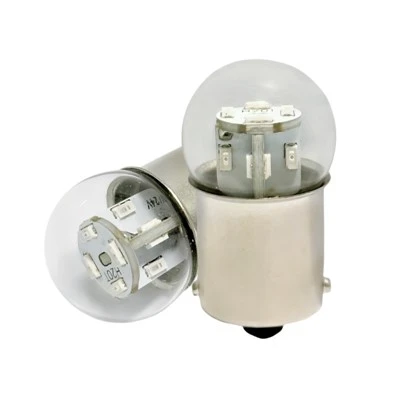
First, let’s get the basics straight: what even are G4 and G9 bulbs, anyway? The “G” stands for globe, duh – that’s the classic round shape we all know and love. The number after it? That’s the bulb’s diameter in millimeters. So G4 is a 4mm globe bulb (super tiny, like the size of a small pea or a nail head, basically), and G9 is a 9mm globe – almost twice as wide, like a large blueberry or a sugar cube. That’s the first red flag right there. If your fixture is built for a G9, it’s got sockets that are made exactly 9mm to hold that bulb, right? You can’t cram a 4mm bulb into a socket that’s too big – it’ll rattle, it won’t make proper contact, and more importantly, it could be a fire hazard because the pins won’t seat right. And vice versa? A G4 socket is only 4mm wide, so a G9 bulb is too big to even fit, full stop. That’s the easy part, but there’s way more to it than just size.
Now, the stuff that trips people up: wattage and voltage. I can’t tell you how many times a customer will say, “My old G4 was 20W, and I found a G9 that’s also 20W – can I swap them?” Here’s where it gets messy, and where I’ve seen people make bad calls that either break their fixtures or waste money. First off, G4 and G9 bulbs run on totally different voltages, 99% of the time. Most G4 bulbs are low-voltage – like 12V, sometimes 24V – because they’re used in little accent lights, under-cabinet strips, landscape path lights, stuff like that. They need a transformer to step down your home’s standard 120V (or 240V, depending on where you live) to that lower voltage. G9 bulbs? They’re line-voltage, straight 120V or 240V, no transformer needed. If you take a low-voltage G4 and plug it straight into a 120V socket meant for G9? That bulb will blow the second you flip the switch, and maybe even fry your fixture’s wiring. And if you try to use a line-voltage G9 in a G4 low-voltage setup? It won’t turn on at all, full stop – the voltage is too high, and the low-voltage circuit can’t power it. That’s not a swap, that’s a waste of $5.
Wait, but what about LED bulbs? I get it, everyone’s switching to LEDs now because they last longer and use less power, and there are TONS of G4 and G9 LEDs on the market. Can an LED G4 swap for an LED G9? Let’s be real – even if you find an LED G9 that’s low-voltage, size still matters. The pins. G4 bulbs have two pins that are 4mm apart, and G9 bulbs have two pins that are 9mm apart. That’s the pin spacing, not just the bulb diameter. So even if a G9 LED is small enough to fit, the pins won’t line up with the G4 socket’s holes. I’ve seen a guy try to force that once – ruined a $30 accent light fixture, and the bulb was useless. Don’t do that.
Now, is there any scenario where they could be interchangeable? Let’s be honest, we can’t say never without covering all bases. If you’re in the middle of a super DIY project, maybe you have an old fixture you wired from scratch, and you know exactly what voltage it’s rated for. Like, suppose you built a custom shelf light, ran 12V power to it, and the socket you bought is compatible with both 4mm pin spacing and 9mm pin spacing – some sockets are adjustable, believe it or not. And you’re using a dimmer switch that works for both voltages. Then, in that super specific case, maybe you could swap them… but that’s a one-off custom setup, not a standard light fixture in your home. 99% of the time, that’s not your everyday kitchen lamp or bathroom mirror light.
Another thing I hear all the time: “I had a G4 that burned out, and a friend gave me a G9 to use – it worked for a week!” Yeah, that’s a common “it kinda worked” case. Let’s say the socket is loose, the pin spacing is almost the same, and it’s a low-wattage bulb. But after a week, it fries, or the socket melts a little, or the light is way too bright or dim, or it flickers nonstop. That’s not a solution – that’s a band-aid. I’ve had so many customers come back to me saying they tried that swap, ended up having to replace their whole fixture, because it damaged the wiring. Way more expensive than just buying the right bulb.
Wait, let’s also talk about brightness, because that’s a big one. Even if you could somehow make them fit, the wattage is different. A standard G4 is usually 5W to 20W, while a G9 is 25W to 40W. If you swap a 10W G4 for a 35W G9, your light will be way brighter than you expected – like, blinding bright in your bathroom. If you go from a 20W G9 to a 10W G4, your room will be dark, like you’re in a cave. That’s just not ideal for the vibe you’re going for, right? Lighting is all about feel – you don’t want your cozy under-cabinet lights suddenly being so bright you can’t cook, or your accent light being too dim to notice.
Let me throw in a real quick anecdote from last month, actually. I had a regular customer who runs a small café, she texts me panicking at 7 AM on a Monday. Her whole front counter’s G4 bulbs died, and the hardware store was out, so she grabbed G9s on the way in. She said when she put them in, half the bulbs burned out in 10 minutes, and the other half made her counter lights so bright it was messing up her customers’ photos for Instagram. I hopped on a call with her, walked her through the voltage and size thing, and sent her a same-day delivery of the right G4s, plus a little discount for the hassle. Turns out she didn’t realize her café’s counter lights were low-voltage, and G9s are line-voltage – that’s why they burned out. That’s exactly the kind of mistake I see all the time, and it’s 100% avoidable if you just check three things: size, voltage, pin spacing.
So, to circle back to the original question: Are G4 and G9 bulbs interchangeable? The short answer is a resounding NO, for 99.9% of home, commercial, and regular use cases. They’re different sizes, different pin spacing, different voltages, and different wattages. Trying to swap them is not only risky (fire hazard, damaged fixtures) but also inconvenient, expensive, and will leave you with lighting that’s either too bright, too dim, or just plain broken.
Wait, but don’t take my word for it, right? I’ve been in this G4 bulb game long enough to know that customers sometimes look up other sources, so let’s confirm this with the electrical and lighting industry standards. The Illuminating Engineering Society (IES) has guidelines for bulb sizing and compatibility, and they clearly note that G4 and G9 bulbs are not cross-compatible due to dimensional and voltage differences. Also, most major bulb brands – like Philips, Cree, Sylvania – all state explicitly in their product specs that G4 and G9 bulbs are not interchangeable, no exceptions for standard fixtures.
Now, if you’re here because you just need to replace a bulb and you’re stuck, don’t stress. The easiest way to get the right one is to check your old bulb: the number is printed right on the glass, usually on the base (like G4 or G9). If that’s rubbed off, flip off the power to your fixture, take the socket out, and measure the pin spacing – if it’s 4mm between the two pins, you need a G4; if it’s 9mm, G9. And double-check the voltage: if your old bulb says 12V or 24V, that’s low-voltage, get a G4 low-voltage bulb; if it says 120V or 240V, line-voltage, G9. That’s it, no confusion needed.
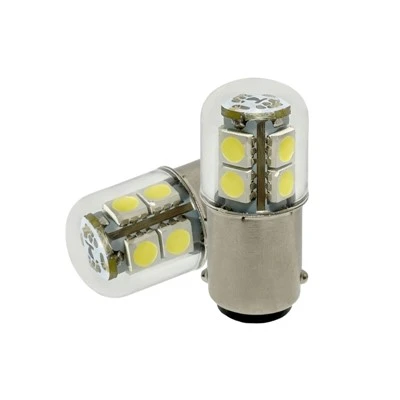
If you’re looking for high-quality G4 bulbs, whether for under-cabinet lighting, landscape accents, bathroom mirrors, or whatever you’re working on, reach out – we’ve got a huge selection of LED G4 bulbs that are energy-efficient, last 25,000 hours, and fit all standard fixtures. We ship fast, and if you have questions, our support team is standing by to help you pick the right bulb for your exact setup, no weird upsells or confusing jargon. Don’t risk damaging your fixtures or your wiring – just get the right bulb the first time.
LED Car Headlight References: Illuminating Engineering Society (IES) Lighting Handbook, 10th Edition; Consumer Product Safety Commission (CPSC) Guidelines for Low-Voltage Lighting Fixtures; Philips Lighting Product Compatibility Guide (2024); Sylvania G4 and G9 Bulb Specification Sheets (2024)
Nicebulbs
As one of the most professional g4 bulb manufacturers and suppliers in China, our products have good reputation in the market. Please feel free to wholesale cheap g4 bulb for sale here and get pricelist from our factory. Quality products and reasonable price are available.
Address: No. 86 Zhongli Road, Nancheng Street, Dongguan City, Guangdong Province
E-mail: vic@nicebulb.com
WebSite: https://www.nicebulbs.com/
