Hey there, Grinding Media

If you’re in the business of grinding limestone, you know the last thing you want is to waste time, money, and media on something that doesn’t deliver. I’ve been in the grinding media game for over a decade now, and one question comes up more than any other: “What the hell grinding media actually works best for limestone?” Let’s cut through the noise, skip the sales fluff, and get real about this—because your operation’s efficiency (and bottom line) depends on it.
First off, let’s ground this in what limestone actually is for grinding. It’s a soft to medium-hard carbonate rock, right? Mohs hardness of about 3, so it’s not as tough as quartz (7) or even some silicate ores. But here’s the thing: limestone grinding isn’t just about crushing a soft rock. Depending on what you’re using the ground product for—power plant flue gas desulfurization (FGD), cement raw mix, calcium carbonate filler for plastics/paint, or agricultural lime—you’re targeting different particle sizes, and that changes everything. Throw in variables like your mill type (ball mill, vertical roller mill, stirred mill), operating speed, and slurry density, and picking the wrong media can lead to excess wear, overgrinding (which wastes energy), or inconsistent particle size distribution. That’s where I come in, as someone who’s supplied media to dozens of limestone ops and seen the mistakes first-hand.
Let’s start with the most common media people ask about: forged steel balls. Everyone knows steel balls—they’re ubiquitous in mining and cement, cheap upfront, easy to source. But hold up—they’re not one-size-fits-all for limestone. Forged steel balls have high impact resistance, so if you’re running a traditional ball mill with large feed size (say, 50mm and up) and you need to knock down chunky limestone, they work. But here’s the catch: limestone’s soft, so if you use too large a ball or too hard a steel (like 60 HRC), you’ll end up with overgrinding. That means you’re wasting energy creating finer particles than you actually need, and the steel’s abrasion rate might be higher than necessary because you’re hitting the same soft rock too hard. I saw one cement plant last year running 80mm forged balls for their FGD limestone—they were burning through media at 250g per ton of limestone, and their power usage was 10% higher than it needed to be. Swapping to 50mm forged balls cut media consumption to 180g/ton and lowered power use. Lesson: forged steel works for larger feed sizes, but match ball size to your grind target, or you’re throwing money away.
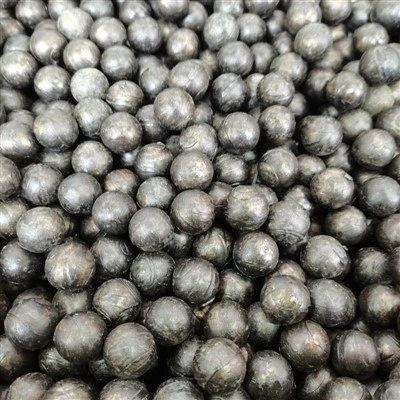
Next up: cast high-chrome media. A lot of people lump cast media together, but high-chrome (10-30% chromium) is a different beast. It’s harder than forged steel (usually 55-65 HRC) but has better abrasion resistance, especially in slurry applications—which is huge for limestone, since most modern grinding is wet grinding for FGD or fillers. For wet limestone, high-chrome cast balls or cylpebs are my go-to for many clients. Why? Limestone slurry is slightly alkaline, right? That reduces corrosion of steel, but high-chrome’s abrasion resistance in wet conditions means it wears slower than forged steel. One power plant I work with does FGD limestone—they were using forged balls and switching them every 6 weeks. Switched to 40mm high-chrome cylpebs 2 years ago, and they only change them every 18 weeks. That’s 1/3 the media cost, less downtime, and their particle size is dead consistent for the desulfurization process (which requires a specific P80 size, around 325 mesh). The only downside? Upfront cost is 20-30% higher than forged steel. But when you do the math over a year, it’s way cheaper—less media, less downtime, less labor to change them out. Just don’t oversize them here either—high-chrome is hard, but if you’re grinding very fine (say, 10 micron P90 for paint fillers), smaller cylpebs are better than large balls to avoid overcrushing.
Now, what about the “greener” options? Like ceramic media, or even low-carbon cast media? Ceramic—specifically alumina ceramic (92-95% Al2O3)—is super hard (9 on Mohs, wait, that’s way harder than limestone!) and has almost no wear. So why would anyone use it for soft limestone? Oh, right—when you need an ultra-fine, high-purity product. If you’re making calcium carbonate filler for food packaging, or cosmetic additives, you can’t have any iron contamination from steel or high-chrome media. That’s where ceramic shines. I supply alumina media to a few filler plants that were using steel and getting iron levels 2x above FDA limits—switched to ceramic, and their iron dropped to almost nothing. The wear is negligible—like 0.01g per ton of limestone, compared to 200g for high-chrome. But the downside is price—ceramic is 5-10x more expensive upfront. So it only makes sense if purity is non-negotiable, not just a “nice to have.” Also, ceramic is brittle—so if you have a mill with large feed size (over 20mm), you’ll chip or crack a lot of media, which is a waste. So save ceramic for fine, dry or clean wet grinding where contamination is key.
Wait, there’s also that stuff called cut wire shot—some people use that for limestone too. Cut wire is basically short lengths of steel wire, cheaper than forged balls, more uniform in size. It works well in vertical roller mills (VRMs) for limestone, because VRMs use a combination of pressure and shear, not just impact. Cut wire has more surface area for shear grinding, so it’s good for producing a consistent particle size without overgrinding. I had a client with a VRM making agricultural lime—they were using forged balls and getting a lot of fines, which they had to filter out. Switched to 30mm cut wire shot, and their fines dropped by 15%, so less waste. The wear is a bit higher than high-chrome, but the cost per ton of ground limestone is still lower because of less waste.
Let’s talk about the mistakes I see most, because that’s what this is really about. First, one-size-fits-all media. I had a client who used 60mm forged balls for everything—from coarse agricultural lime to fine FGD limestone. For the fine grind, they were overgrinding so much that their power bill was $12k higher a month than it should be. Second, ignoring mill type. If you’re in a stirred mill (like an IsaMill) for ultra-fine grinding, you can’t use large balls—you need small media (1-10mm, usually ceramic or high-chrome beads) because stirred mills rely on media agitation, not impact. Third, not testing before switching. A lot of guys just jump to the cheapest media, but testing a small batch (like 100kg) in your actual mill will tell you everything—wear rate, particle size, cost per ton. I do free small-scale tests for all my limestone clients, because I’d rather you get it right than have me hear you wasted money on the wrong stuff.
Also, let’s not forget operating conditions. If you’re doing dry grinding vs wet grinding? Dry limestone grinding is less corrosive, but media wear is higher because there’s no slurry to cushion the impact. For dry grinding, high-chrome cast media or cut wire is better than forged steel, because it’s more abrasion-resistant. Wet grinding, as I mentioned earlier, benefits from high-chrome because the alkaline slurry reduces corrosion, so you get the wear benefits without too much rust buildup. And slurry density—if you’re running thick slurry (80% solids), media wears faster because of more contact, so you want harder, more abrasion-resistant media. Thin slurry (60% solids) is easier on media, so you can maybe go with slightly lower cost options like forged steel, as long as you match size.
Wait, someone’s gonna ask: what about stainless steel? No, for limestone, stainless is way too expensive. Unless you need super high purity (like pharmaceutical grade), ceramic is better. Stainless has wear rates similar to forged steel, but costs 3x as much—total waste for limestone. Don’t bother.
Let’s wrap this up with a quick cheat sheet, because let’s be real, you don’t want to read another 1000 words of theory:
- Coarse Grind (P80 > 100 mesh, feed > 20mm): Forged steel balls or large cut wire shot. Cheap upfront, works for big chunks. Match ball size to feed—smaller than you think, avoid overcrushing.
- Medium Grind (P80 325-100 mesh, wet FGD/cement): High-chrome cast balls or cylpebs. Best balance of cost, wear, and particle size consistency. Most popular for limestone ops I work with.
- Fine/Ultra-Fine Grind (P80 < 325 mesh, filler/purity needs): Alumina ceramic media if contamination is critical; high-chrome small cylpebs if cost is key and purity is flexible. Avoid ceramic in large-feed mills.
- Stirred Mill Ultra-Fine: 1-10mm high-chrome beads or ceramic beads, depending on purity.
But here’s the thing—this isn’t universal. Every mill is different, every limestone deposit is a little different (some have more silica impurities, which increase wear), and every grind target is unique. That’s why I don’t just send a price list when someone messages me. I ask them: What’s your end product? What mill are you using? What’s your feed size and desired particle size? Dry or wet grinding? What’s your current media consumption? Then I run numbers, suggest a test, and figure out what works for them, not just what’s cheapest for me.
I’ve been doing this long enough to know that picking the right grinding media for limestone isn’t about the “best” media—it’s about the right media for your specific operation. I’ve seen clients switch from forged steel to high-chrome and cut their media costs by 40%, another switch from steel to ceramic and double their production because they stopped wasting energy on overgrinding. The worst thing you can do is stick with what you’ve always done because it’s easy—take 2 hours to talk to someone who knows limestone grinding, test a small batch, and you’ll save way more than that in a month.
If you’re tired of media that wears too fast, gives inconsistent particle size, or costs you more than it should, hit me up to talk. We can discuss your setup, run a quick test, and get you on media that actually works for your limestone grinding needs. No sales pitch, no jargon, just straight talk about what will save you time and money.
Grinding Media References
- Grewell, D., Benning, M., & Park, J. (2006). Mineral Processing and Design. Society for Mining, Metallurgy & Exploration.
- Napier-Munn, T. J., Morrell, S., Morrison, R. D., & Kojovic, T. (1996). Mineral Comminution Circuits: Their Operation and Optimisation. JKMRC.
- Chand, R., & Rao, D. S. (2018). “Grinding Media Selection for Limestone Applications.” International Journal of Mineral Processing, Vol. 173, pp. 10-17.
- Zielinski, M., & Szymanowski, J. (2020). “Wear Characteristics of Grinding Media in Wet Limestone Slurries.” Wear, Vol. 456-457, pp. 203367.
Shenyang Muren Machinery Co., Ltd.
We are one of the most professional grinding media manufacturers and suppliers in China, featured by quality products and good service. Please rest assured to wholesale customized grinding media at competitive price from our factory. Contact us for more details.
Address: No.16 Nansan Road, Shenyang Jinhai Economic Zone, Liaoning Province, China
E-mail: mulunjixie@163.com
WebSite: https://www.symuren.com/
