If you’ve ever driven past a sunbaked midwestern farm field at 5 a.m., watched a row crop of corn sway in the wind, or seen a family-owned orchard stretch to the horizon, you’ve seen the quiet workhorse that keeps that operation running: the heavy duty tractor. As someone who’s spent the last 12 years selling, servicing, and troubleshooting these machines for farm operations across the Great Plains and Midwest, I’ve lost count of how many times I’ve heard farmers say, “We couldn’t plant, tend, or harvest without one.” What many people outside agriculture don’t realize is that heavy duty tractors aren’t just big versions of the lawn mower you use on your weekend yard—they’re specialized, precision-built tools that solve some of the biggest challenges modern farming faces: scaling up without sacrificing soil health, cutting labor costs, and adapting to erratic weather patterns. Heavy Duty Tractors
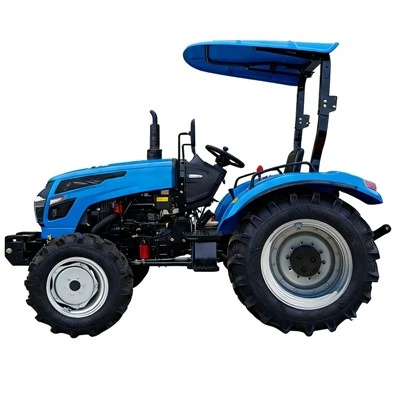
Let’s start with the foundation: soil health. For decades, traditional farming relied on plowing, a practice that turns over the top layer of soil to prepare for planting, but also disrupts soil structure, depletes organic matter, and increases erosion. Today’s heavy duty tractors come equipped with no-till and reduced-till implements that let farmers plant directly into unplowed soil. I worked with a corn and soybean farmer in central Iowa last year who switched to a heavy duty tractor with a no-till planter attachment; he told me his soil organic matter went up 18% in three years, and his erosion rates dropped by 42%. That’s not a small number—soil erosion costs U.S. agriculture billions of dollars annually in lost productivity, and no-till farming is one of the most effective ways to combat it. Heavy duty tractors make this possible because they have the power to pull large, heavy implements over uneven terrain, through crop residue, and across fields without compacting the soil. A regular utility tractor might not have enough weight or torque to pull a no-till planter through thick leftover stalks, which means farmers would have to compromise on soil health. Our heavy duty models, with their 200+ horsepower engines and optimized weight distribution, deliver the exact force needed to keep no-till operations efficient.
Then there’s labor, a crisis that’s been building in agriculture for years. The Bureau of Labor Statistics reports that U.S. farming labor shortages reached a 20-year high in 2023, with nearly 70,000 unfilled positions during peak planting and harvest seasons. That’s where heavy duty tractors step in as a labor multiplier. A single heavy duty tractor operator can plant 50 acres of corn in a single day, whereas a team of manual laborers would take a week or more to cover that same area. I spoke to a vegetable farmer in Ohio who grows 120 acres of tomatoes, peppers, and cucumbers; before he invested in our heavy duty tractor with a self-propelled harvester attachment, he had to hire 18 seasonal workers during harvest, pay overtime, and deal with high turnover. Now, he runs two tractors, each with a single operator, and cuts his harvest labor costs by 65% while getting the crop in faster. For high-value crops like vegetables, speed during harvest means the difference between delivering produce that’s fresh and selling at a discount because it’s past its peak. Heavy duty tractors don’t just replace workers—they let farmers do more with less, which is critical when labor is scarce and expensive.
Weather volatility is another big challenge for modern agriculture, and heavy duty tractors are built to adapt. Over the last decade, we’ve seen more extreme weather: early rains that delay planting, droughts that require precise irrigation, and late frosts that threaten young crops. Heavy duty tractors are versatile enough to handle all of these scenarios. When spring rains turn fields into mud, a heavy duty tractor with deep-tread tires or tracks can navigate soft soil without getting stuck, whereas a lighter tractor would sink and get stranded for days. I had a customer in Nebraska last spring whose fields were flooded for two weeks; he used our heavy duty tractor equipped with a drag harrow to drain excess water and prepare his soybean fields for planting as soon as the soil dried out, beating a late-season frost that would have damaged his crop if he’d waited another week. For irrigation, heavy duty tractors can pull center-pivot and drip irrigation systems across large fields, ensuring crops get the right amount of water even during droughts. A utility tractor might struggle to pull a 100-foot irrigation line across a dry, dusty field, leading to uneven watering and lower yields. Heavy duty tractors’ power and stability mean they can work in the harshest conditions, giving farmers a better chance to protect their crops when weather goes wrong.
Precision agriculture is another area where heavy duty tractors shine. Modern models come with GPS guidance systems, auto-steer, and telemetry that let farmers plant and apply fertilizers and pesticides with pinpoint accuracy. A GPS-guided tractor can stay within a 2-inch line, which reduces overlap by up to 10% compared to manual driving. That means less wasted seeds, less overuse of chemicals, and more uniform crop growth. I worked with a wheat farmer in Kansas who used to fertilize his fields by broadcasting chemicals manually; he was over-applying nitrogen by 15% in some areas, wasting money and contributing to water pollution. After investing in a heavy duty tractor with variable-rate technology, he now applies exactly the amount of fertilizer each section of his field needs, cutting his input costs by 12% and reducing his environmental footprint. Precision agriculture only works with tractors that have the power to carry the technology and pull the implements needed. A small tractor might not have the electrical capacity for GPS or variable-rate controllers, or enough weight to keep the planter’s seed drop consistent. Our heavy duty models are designed to integrate seamlessly with these technologies, turning raw data into tangible savings for farmers.
Let’s also talk about longevity and return on investment. A high-quality heavy duty tractor can last 20 to 30 years with regular maintenance, which is a huge benefit for small and medium-sized farms that can’t afford to replace equipment every few years. I’ve serviced tractors that are 25 years old, still running strong, and doing work that newer tractors can do—though with better efficiency. That means farmers don’t have to take on crippling debt to get reliable equipment. When a farmer invests in a heavy duty tractor, they’re not just buying a machine; they’re investing in years of consistent performance, higher yields, and lower operating costs. I’ve seen customers pay off their tractor in 5 years, and then use it to generate profit for another 15 years. Compare that to renting equipment every season, which can cost more over time and leave farmers without control over their harvest or planting schedule. Heavy duty tractors give farmers the independence to run their operations on their own terms.
Now, I know what some people might be thinking: “What about new technology? Will tractors get replaced by autonomous farm equipment?” The truth is, autonomous tractors are still in the early stages, and they can’t do everything a heavy duty tractor can right now. They lack the power to pull large implements over uneven terrain, adapt to unexpected obstacles like fallen branches or livestock, and handle the kind of heavy loads many small farms need. Heavy duty tractors are still the backbone of operations, and they’ll be for years to come. Even as autonomous tech improves, most farmers will still rely on human-operated heavy duty tractors for the bulk of their work.
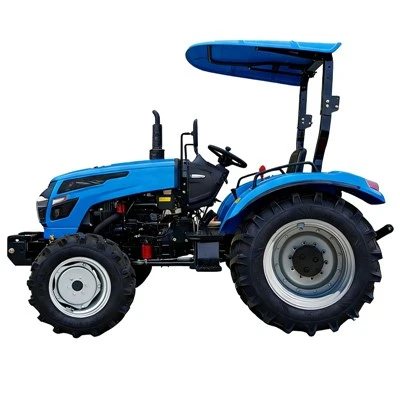
If you’re a farmer who’s considering upgrading your equipment, or you’re just starting out and need reliable tools to grow your operation, our team has spent decades helping farmers pick the right heavy duty tractor for their needs. We don’t just sell machines—we provide servicing, training, and customized solutions for every type of farm, from 50-acre vegetable operations to 10,000-acre grain farms. Whether you need a tractor for no-till farming, harvest, irrigation, or all of the above, we can help you find a model that fits your budget and your goals. We’re here to answer your questions, show you our equipment in action, and work with you to make sure you get the most out of your investment.
Tractor References
US Bureau of Labor Statistics. Farm Labor Report 2023
Natural Resources Conservation Service. No-Till Farming and Soil Health: 2022 Update
American Farm Bureau Federation. Agriculture Labor Shortage Analysis
Kansas State University Agricultural Experiment Station. Precision Agriculture Input Cost Savings 2024
University of Iowa Extension. Soil Erosion and No-Till Farming Outcomes
Shandong Woye Heavy Industry Co., Ltd.
As one of the most experienced heavy duty tractors manufacturers in China, we ensure reliable supply for global partners. We warmly welcome you to wholesale high-grade heavy duty tractors for sale here from our factory. Quality products and reasonable price are available.
Address: No. 7999, Health East Street, Qingchi Street, High Tech Zone, Weifang City, Shandong Province, China
E-mail: info@woyemachinery.com
WebSite: https://www.woyeagro.com/
