If you’ve ever been in the market for a net weighing bagger—whether for agriculture, food processing, construction materials, or any bulk product packaging operation—you’ve probably asked: “How long does it actually take to get this piece of equipment up and running after it arrives on site?” The answer isn’t as straightforward as a single number, because installation time depends on a mix of factors that vary from one job to the next. As a supplier of net weighing baggers, I’ve spent thousands of hours walking clients through every step of this process, and I can tell you that the timeline is something we plan for, adjust, and communicate clearly long before your equipment even leaves our facility. Net Weighing Bagger
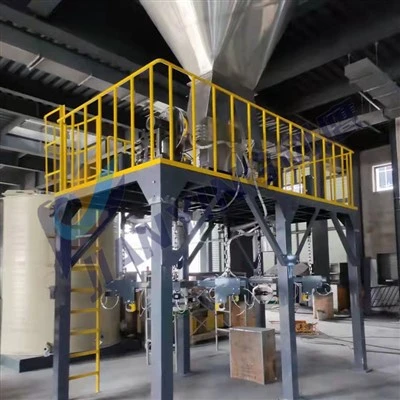
First, let’s break down what net weighing bagger installation actually entails. A net weighing bagger isn’t just a single machine; it’s a system. That system combines the bagger unit itself, a control panel, material feed hoppers, sometimes conveyor systems to move product to the bagger, and often integration with your existing production line. Installation isn’t just plugging in wires and turning dials. It’s about ensuring every component works in sync to deliver the accuracy and speed you need—because the whole point of a net weighing bagger is that it measures the exact net weight of your product (no overfilling, no underfilling, which saves you money and keeps your products compliant with industry standards like FDA or USDA regulations for food and agricultural goods).
Let’s start with the pre-installation phase, because this is where a lot of delays happen, and where we as suppliers play a big role in setting realistic timelines. Before we even schedule your machine for shipment, our team of application engineers will conduct a site assessment. We’ll ask questions like: Is your power supply compatible with the bagger’s electrical requirements? What’s the height of your existing conveyor or output equipment, and does it match the bagger’s discharge height? Do you have enough floor space to fit the bagger and any associated conveyors, without blocking access for maintenance or safety pathways? We also work with you to train one or two of your in-house team members on what to expect during installation, so no one is caught off guard when our technicians arrive. This pre-installation step typically takes 1 to 3 days, depending on the complexity of your setup. For example, if you’re just replacing an old bagger with a new one in the same footprint, this assessment is quick—usually 1 day. If you’re adding a bagger to a new production line, it might take 3 days to map out all the connections.
Next, there’s the equipment shipment. Our lead times for net weighing baggers are generally 4 to 8 weeks, depending on the model and customization (some clients need special features, like dust collection systems for fine powders, or bag printers for traceability labels). Once the machine is ready, we arrange for a delivery that works with your schedule. Shipment time varies based on your location: if you’re within 500 miles of our facility, it usually takes 1 to 2 days to arrive. For cross-country or international orders, it can take 5 to 10 days, but we track every shipment in real time so you know exactly when to expect the equipment.
Now, the on-site installation itself. This is the part most clients want to know about, and it’s where our experienced technicians shine. For a standard, standalone net weighing bagger (no conveyor integration, no special modifications), our two-person installation team takes 1 to 2 days to complete the full setup. Here’s a breakdown of that time: Day 1 is for unloading the machine (we use heavy-duty forklifts or cranes as needed, depending on the bagger’s size), leveling the unit, connecting the electrical supply, and installing the material feed hopper. Day 2 is for calibrating the scale, testing the bag loading mechanism, and running a trial production run with your product. Calibration is a critical step that can’t be rushed—even a small miscalibration can lead to 10 or 20 pounds of overfill per bag, which adds up to thousands of dollars in waste over a month. We use your actual product for calibration, not a test material, because different products (like sugar vs. wood pellets) have different flow characteristics, which affect accuracy.
But what if your setup is more complex? If you need to integrate the net weighing bagger with an existing conveyor system, or if you’re adding a secondary component like a bag sealer, conveyor, or palletizer, installation time increases. For a system with moderate integration—say, a bagger connected to a 10-foot infeed conveyor and a rotary bag sealer—our team takes 3 to 4 days on site. We have to align the conveyor’s discharge with the bagger’s infeed, adjust the speed of both units so product flows smoothly without jamming, and test the sync between the bagger’s control panel and the sealer. For fully automated lines that include multiple conveyors, a robotic palletizer, and data logging software for production tracking, installation can take 5 to 7 days. The good news is that our technicians bring all the tools and parts they need with them, so we don’t have to wait for supplies to arrive mid-installation.
Another factor that affects installation time is your team’s readiness. During our on-site work, we’ll train your operators to run and maintain the bagger, and we’ll need your team to be available to answer questions, provide access to your site, and help with trial runs. If your team is busy with other production tasks and can’t dedicate time, the installation can take an extra day or two, because we have to pause testing to wait for your input. On the flip side, if your team is ready and engaged, the process moves much faster. I’ve seen installations wrap up a full day ahead of schedule when the client’s operators ask thoughtful questions and are eager to learn, which makes the handoff to daily production smooth.
Now, let’s talk about post-installation validation, which is a step we don’t cut corners on. Even after the machine is up and running, we run a series of tests to make sure it meets your requirements. For most clients, that means 50 to 100 trial bags to check for weight accuracy, bag integrity, and speed. If you need to meet specific industry standards—like USDA requirements for meat packaging, or organic labeling for produce—we work with you to adjust the calibration to pass those audits. This validation step usually takes half a day, but it can extend to a full day if there are minor tweaks needed. For example, if your product is a fine powder that tends to stick to the hopper, our technicians might add a vibrator to the hopper mid-test, which adds a few hours.
Putting it all together, the total timeline from order confirmation to full, operational use of your net weighing bagger is: 4 to 8 weeks for manufacturing and customization, plus 1 to 10 days for shipment, plus 1 to 7 days for on-site installation and testing. That adds up to a total of roughly 6 weeks to 3 months, depending on the complexity of your order and setup. Wait, I know that’s a wide range, but that’s the reality of custom packaging equipment. A standard standalone bagger for a small farm might be ready in 6 weeks, delivered 2 days later, installed in 2 days, and fully operational in 7 weeks total. A fully automated system for a large food processing plant might take 8 weeks to build, 7 days to ship, 5 days to install, and wrap up in 3 months.
As a supplier, we’re always working to reduce wait times without compromising quality. We keep a inventory of common net weighing bagger models in our warehouse, so if you need a quick replacement for a broken old machine, we can ship within 1 week, and installation takes just 2 days. We also offer expedited pre-installation site assessments for clients who are on a tight schedule, so we can identify and resolve issues before equipment arrives. For example, last quarter we had a client in the construction materials industry who needed a bagger for landscaping mulch to meet a large order deadline. We did a same-day site assessment, confirmed their power and space were ready, shipped the machine 5 days later, and our team installed and calibrated it in 1.5 days, so they were able to start production 3 days ahead of their original plan.
I should also mention what can slow down installation, so you can avoid these pitfalls. The most common delay is unprepared site conditions. If your floor isn’t level, or if your electrical supply is not the correct voltage, our technicians can’t start installation until those issues are fixed, which adds days. Another common issue is last-minute changes to your order. If you decide to add a feature—like a bag printer or dust collection system—after the machine is already in production, that can push back manufacturing time, which in turn delays installation. We always encourage clients to finalize their requirements early, so we can build the machine to order without changes down the line.
Once installation is complete, our support doesn’t stop. We provide a 12-month warranty on all our net weighing baggers, and our service team is on call 24/7 for any issues that come up during the first year. We also offer ongoing training sessions for your operators, so they can learn to troubleshoot minor issues on their own, which reduces downtime. Many of our clients tell us that the handoff process is one of the most valuable parts of working with us—we don’t just drop off a machine and leave; we make sure your team feels confident using it.
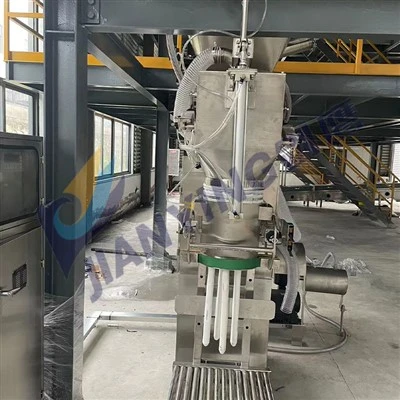
At the end of the day, the installation time for a net weighing bagger isn’t a random number—it’s a product of planning, preparation, and collaboration between us as the supplier and your team. If you’re ready to invest in a net weighing bagger to improve your packaging accuracy, reduce waste, and speed up your production line, we’re here to walk you through every step. We can provide a custom timeline based on your specific needs, answer any questions about installation, and help you choose the right model for your products. Don’t hesitate to reach out to our team to start the conversation about how a net weighing bagger can benefit your operation, and to get a detailed timeline tailored to your project.
Net Weighing Bagger References
- Packaging Machinery Manufacturers Institute. (2022). Installation and Commissioning Guidelines for Bulk Packaging Equipment.
- Food and Drug Administration. (2021). Compliance Guidelines for Net Weight Labeling in Food Packaging.
- Net Weigh Bagger Supplier Technical Documentation. (2023). Standard Installation Protocols and Timelines for Automated Packaging Systems.
Wuxi Jianying Intelligent Equipment Co., Ltd.
We are one of the most professional net weighing bagger manufacturers and suppliers in China, featured by quality products and good price. Please rest assured to buy durable net weighing bagger for sale here from our factory. Welcome to contact us for custom service and OEM service.
Address: No.88, Xinyang Road, Ehu Town, Xishan District, Wuxi City, Jiangsu Province, P.R.China
E-mail: wuxijianying@163.com
WebSite: https://www.wuxijianying.com/
