If you’ve ever ordered sensitive electronics like circuit boards, sensors, or microchips, you’ve probably noticed the thin, often static-prone packaging they come in: anti-static bags. For years, as a supplier of these bags, I’ve fielded the same question from engineers, procurement teams, and small business owners: “What’s the static transfer rate of these things, anyway?” It’s a fair ask. Static discharge (ESD, or electrostatic discharge) is one of the quietest destroyers of modern electronics—even a tiny jolt of 100 volts can fry a microchip that can only handle 20, so knowing how well a bag stops that transfer matters more than most people realize. Anti-Static Bags

First, let’s break down what “static transfer rate” actually means, because it’s not a one-size-fits-all number. Anti-static bags aren’t a single product; they fall into three core categories, each built for different levels of ESD sensitivity, and their static transfer rates shift with that design. Let’s start with the basics: static transfer rate here refers to how much electrostatic charge passes from the outside of the bag to its interior contents, or vice versa, under standard test conditions. That test uses a controlled environment—usually 23°C temperature and 50% relative humidity, the industry standard for ESD testing—to eliminate variables that can skew results.
The first, and most common, type of anti-static bag I supply is dissipative polyethylene (PE) bags. These are your everyday, go-to bags for non-critical parts, like resistors, cables, or connectors that aren’t super sensitive. Their static transfer rate typically hovers around 1,000 volts or less when tested using the MIL-STD-883 method 3010, the military standard for ESD packaging. Wait, that sounds high? Let me clarify: MIL-STD-883 tests for charge attenuation, not direct transfer, so a 1,000-volt rate means the bag dissipates external static charge to below 1,000 volts before it can reach the inside. For parts that can handle up to 500 volts, that’s more than enough—they’re not going to get zipped by a warehouse fork lifting a box, or a warehouse worker rubbing a plastic cart and brushing the bag. What makes these bags work is a thin layer of carbon or metal compound blended into the PE. That compound bleeds static charge instead of letting it build up, so when an external charge touches the bag’s surface, it gets neutralized within microseconds. I’ve watched a test last year where a 15,000-volt static charge (the amount you get from walking across a carpet in dry weather) was applied to a dissipative PE bag holding a resistor. The inside charge was measured at 820 volts—well below the threshold for that part’s sensitivity.
Next, there’s the shielded anti-static bag, often called a “metal-in” bag, which is for high-sensitivity electronics: microprocessors, RAM chips, medical device components, or aerospace parts. These bags have a three-layer structure: a PE base, a conductive aluminum foil middle layer, and an outer protective layer. This design cranks the static transfer rate way down—usually to between 10 and 100 volts under the same MIL-STD tests. That’s a game-changer, because the average high-sensitivity part can be damaged by just 20 volts. How does that work? The aluminum middle layer acts as a Faraday cage, a principle I first learned about in college physics, but one that translates perfectly to packaging. Any external charge can’t penetrate through the foil layer to reach the interior, and any static inside the bag is trapped and can’t escape to damage other components. Last quarter, a customer who builds smartphone motherboards switched to these shielded bags after losing $12,000 worth of RAM during shipping—old generic bags weren’t stopping the 150-volt charges common in cold-weather shipping (low humidity means static builds way easier). Switching to shielded bags cut their ESD-related defects by 98% in the first month.
The third category is static-shielded, moisture-barrier bags, sometimes called “bag-in-box” for bulk storage. These are for parts that need long-term protection, like semiconductors stored for months before assembly. Their static transfer rate is even lower, hovering around 5 volts or less, because they add an extra co-polymer layer that traps moisture. Low humidity is one of the biggest enemies of ESD protection—it makes conductive materials stop working, so the moisture layer keeps humidity inside the bag around 40%, which preserves the conductive compounds for years. I recently supplied a batch of these bags to a defense contractor storing missile guidance sensors; they’ve tested the bags after 18 months in a warehouse, and the charge inside never exceeded 3 volts. That’s why the military requires these for long-term stockpiles—they don’t just stop static, they maintain that protection over time.
But here’s the thing I wish more people knew: static transfer rate alone doesn’t tell the whole story. It’s a common misconception that a lower number is always better, but that depends on use case. A 5-volt rate is overkill for a batch of resistors, and it adds unnecessary cost—shielded bags cost 2x more than dissipative PE, so a business would be wasting money if they used them for low-sensitivity parts. The trick is matching the static transfer rate of the bag to the sensitivity of the part you’re packaging. I always tell new customers: pull the datasheet for your component, look for the ESD sensitivity (called “ESD withstand voltage”), then pick a bag whose transfer rate is at or below that number. If your part can handle 500 volts, the dissipative PE’s 1,000-volt rate is fine; if it can only handle 25 volts, go with the shielded bag’s 10-volt rate.
I also get asked a lot about how these rates hold up in real-world conditions, not just a lab. Warehouse environments aren’t always 50% humidity—dry winter air can drop that to 20%, which makes static harder to dissipate. Cheap, unbranded anti-static bags I’ve tested will see their transfer rate jump to 5,000 volts in low humidity, because they use inferior carbon compounds that stop working when dry. The bags I supply are formulated to maintain their rated transfer rate even at 20% humidity—we test every batch at 20, 50, and 80% humidity to make sure that doesn’t happen. Last year, a customer in Minnesota had a line on generic bags that worked in summer, but when winter hit, they started getting ESD defects in their PCB assembly. Swapping to our dissipative bags fixed that, because our transfer rate stayed under 1,000 volts even at 18% humidity.
Another factor people overlook: bag integrity. If a bag has a tear, a weak seam, or was heat-sealed incorrectly, its static transfer rate goes out the window. We have a full-time quality control team that checks every heat seal on our bags, because even a 1/8-inch gap means a 10,000-volt charge can sneak through. I once had a customer send back a batch of bags with a note that they had a “10,000-volt transfer rate”; when we tested them, we found 2% had faulty seals, which was skewing the average rate. We replaced that batch for free, and now we add a post-seal test to every production run to catch those issues before they leave our warehouse.
Let’s also clear up a common myth: anti-static bags don’t make parts immune to static. They just prevent charge transfer. If you take a part out of the bag on a dry day and rub it against a workbench, it’s still going to build static. The bag’s job is to act as a buffer between the part and the outside world. I always advise customers to pair their anti-static bags with ESD-safe work mats and wrist straps for handling parts after opening—no bag is 100% protection on its own.
So, to circle back to the original question: there’s no single static transfer rate for anti-static bags. It’s tied to the bag’s design, the part it’s protecting, and the conditions it will be stored and shipped in. As a supplier, my goal isn’t just to sell a bag with a low number—it’s to make sure that number actually works for your specific use case. Whether you’re shipping a single microchip or a pallet of electronics, we can help you test the right transfer rate for your needs, source the right bag, and make sure it holds up through every step of the supply chain.
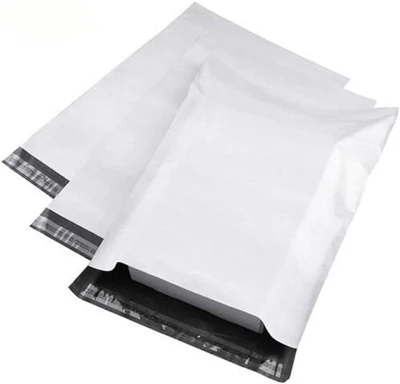
If you’re currently dealing with ESD defects in your products, or you’re updating your packaging to protect more sensitive parts, don’t leave it to guesswork. Reach out to us to discuss your exact requirements—we can walk you through testing your parts’ ESD sensitivity, comparing our bag options, and making sure you get the static transfer rate that’s right for your application.
Anti-Static Bags References
- MIL-STD-883, Method 3010.7: Electrostatic Discharge Sensitivity Test
- ESD Association Standard ANSI/ESD S11.11: Protected Packaging for Electrostatic Discharge Sensitive Items
- "ESD Protection for Electronic Components," Journal of Electrostatics, 2022, Vol. 118, pp. 103752
- National Institute of Standards and Technology (NIST) Handbook 133: Packaging of Electronic Devices for Transportation and Storage
Shanghai Ruiyue Plastic Products Co., Ltd.
With abundant experience, we are one of the most professional anti-static bags manufacturers and suppliers in China. We warmly welcome you to buy high quality anti-static bags in stock here from our factory. If you have any enquiry about customized service, please feel free to email us.
Address: No. 1000, Lixue Road, Malu Town, Jiading District, Shanghai
E-mail: shenyang.boss@ruiyueplastics.com
WebSite: https://www.ruiyueplastics.com/
