As a torsion spring supplier who’s been deep in this game for over a decade, I’ve seen more than my share of torque test mishaps. It’s not just a technical step—it’s the difference between a spring that works flawlessly on a garage door opener or a medical device, and one that ends up costing a customer a production delay or even a safety recall. Torsion spring torque isn’t some vague, unmeasurable spec; it’s the twisting force a spring exerts when you rotate it around its axis, and getting the test right means delivering parts that meet your customers’ exact needs. Today, I’m walking you through how to test that torque properly, straight from the shop floor I’ve run since 2012. Torsion Spring

First, let’s get one thing straight: testing torsion spring torque isn’t like testing a compression spring. Compression springs push straight out, so their measurement is linear and straightforward. Torsion springs twist, and their torque changes with the angle of rotation, which is why a one-size-fits-all approach never works. Too many new customers come to me with a checklist that says “test torque to 10 Nm at 90 degrees” only to realize their application needs that torque at 180 degrees, or that over-testing at a higher angle warps the spring permanently. I always start with a deep dive into the customer’s use case because the test method hinges entirely on where that spring lives. For example, a torsion spring in a aircraft seatback hinge operates at 60-120 degrees of rotation, so we test torque across that specific range, not a random 90 degrees. A commercial garage door torsion spring cycles 10,000 times a year, so we also test durability alongside static torque to make sure the spec doesn’t shift after thousands of twists.
Now, let’s talk about the tools you actually need. You can’t test torsion torque with a basic kitchen scale and a ruler, no matter how handy you are. Here’s the gear I invest in for every test, no shortcuts: a torsion test bench (not a makeshift drill press clamped to a workbench), a calibrated torque sensor, a rotary angle encoder, and a data logger. The test bench isn’t just a hunk of metal—it needs to hold the spring’s ends securely without slipping. If the end of the spring slides in the clamp, your torque reading will be 20-30% lower than actual, and that’s a quick way to get a rejected batch. The torque sensor has to be calibrated within the last 12 months, per ISO 17025 standards; I send mine out twice a year, because a drift of just 5% can ruin your entire batch. The angle encoder is non-negotiable—without it, you can’t match torque to rotation angle, which is the whole point of torsion spring testing.
Step one in the test process: prep the spring properly. Torsion springs have a “set” before they ever reach their final torque. That’s the residual twist the spring retains after manufacturing, and if you test a brand-new spring without setting it first, your readings will be off by as much as 15%. I tell every customer: “If you want accurate torque numbers, cycle the spring 5-10 times to its maximum operating angle before testing.” For a spring that twists 180 degrees, that means rotating it back and forth between 0 and 180 degrees five times. This removes that initial set, so your test measures the actual working torque, not the temporary shift from the coiling process. I once had a customer who skipped this step, ran a batch of springs at their factory, and complained that the torque was too low. When we sent them a pre-cycled sample, their readings matched—they’d just tested as-delivered, not as-used.
Step two: set up the test correctly. Mount the spring in the test bench with one end fixed (clamped tight to the bench’s stationary bracket) and the other end connected to the torque sensor and rotary drive. Here’s a common mistake I see even from experienced engineers: aligning the spring off-center. If the spring isn’t perfectly coaxial with the torque sensor’s axis, you’ll get a false reading from radial force, not just twisting torque. I always spend 10 minutes double-checking alignment before pressing “start” — a quick roll of a straightedge along the spring’s length is enough. Then, program the test to match the customer’s operating range. Don’t just test at one angle. Most of our customers need torque at two points: the “initial” torque (when the spring is just starting to twist) and the “operating” torque (when it’s at its working angle). For a drawer slide torsion spring, that’s often 0 degrees (fully closed) and 90 degrees (fully extended). For a gate hinge spring, it’s 0 degrees (closed) and 180 degrees (open).
Step three: run the test. I do two types of tests for every customer: static and dynamic. Static testing is for the immediate torque spec. I rotate the spring slowly, at 1 degree per second, to avoid any momentum skewing the reading. The data logger will plot torque vs. angle, and I make sure that peak torque doesn’t exceed the customer’s limit, and that the torque doesn’t drop below the minimum. Wait, here’s a critical point: torsion springs get stiffer as you twist them, right? So your torque will naturally rise as the angle increases. If a customer specifies a minimum of 5 Nm at 90 degrees, that’s fine, but don’t accept a spring that only hits 4.8 Nm—factor in a 2-3% variance for manufacturing tolerances, because springs aren’t machined parts, they’re wound from wire, so slight variations happen. Then there’s dynamic testing, which I do for any application that cycles more than 1,000 times a year. Dynamic testing runs the spring through 10,000, 50,000, even 100,000 cycles, measuring torque after every 1,000 cycles. A common failure here is “torque relaxation”—the spring loses torque over time as the wire settles. For a garage door spring, if it relaxes 10% after 10,000 cycles, that’s a problem because it will stop lifting the door. For a medical device, relaxation can be a safety hazard, so we spec maximum relaxation at 5% over 100,000 cycles.
Now, what about common pitfalls that even pros fall for? Let’s start with test speed. If you run the test too fast—say, 10 degrees per second—you’ll get a higher torque reading than actual because of kinetic friction in the spring. I always recommend a slow, steady rate. Another pitfall is not accounting for wire diameter or material. A 302 stainless steel spring will have higher torque than a Music Wire spring of the same dimensions, because steel has a higher shear modulus. When I test a spring, I cross-reference the test readings with the material’s shear modulus to make sure they align. If a customer orders a Music Wire spring but the torque comes in matching 302 stainless, I flag that immediately—we might have used the wrong wire, or the test bench is calibrated wrong. There’s also the issue of end configuration. Torsion springs have different ends: straight torsion ends, double torsion ends, clipped ends. How you mount the end affects the torque reading. For a straight torsion end that slides into a shaft, the friction between the end and the shaft can reduce effective torque by up to 7%, so I simulate that friction in the test setup instead of just clamping the end directly.
Let me give you a real example from last year to make this concrete. A customer who makes kitchen cabinet hinges came to me with a spec: 3 Nm torque at 90 degrees, static. They’d tested their springs in-house and got 2.7 Nm, so they were rejecting our sample before it even arrived. I pulled a sample, pre-cycled it 5 times, set it up on our test bench with a shaft simulating the actual cabinet pivot (not just a bare clamp), and ran the test. We got 2.95 Nm, which was within 2% of their spec. When they re-tested their own spring using the same shaft setup, their reading jumped to 2.9 Nm. The problem? They’d been clamping the spring’s end directly to their test bench, which didn’t replicate the friction of the pivot shaft in their cabinets. That’s why testing has to mirror the real application, not a lab setup.
Now, as a torsion spring supplier, this is how we bring it all together for our customers. We don’t just send a test sheet with a number. We provide a full torque vs. angle curve, show static torque at all specified angles, dynamic torque retention after cycles, and note any tolerances we encountered. If a customer needs a custom spring, we run a prototype test before we go into full production. That prototype test is non-negotiable for us—we’ve had cases where a prototype test revealed a miscalculation in wire diameter, so the torque was 20% off, and we fixed it before producing 10,000 parts.
If you’re out there buying torsion springs, don’t just take the supplier’s word for their torque test results. Ask them for their test method: do they pre-cycle the springs? Do they align the spring to the torque sensor? Do they test across the full operating angle, not just one point? A reputable supplier will have all these answers, and they’ll be able to send you a sample to test in your own setup to confirm.
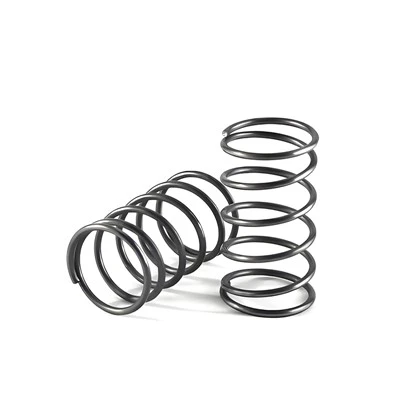
At the end of the day, torsion spring torque testing is about accuracy and consistency. It’s not a box to tick on a manufacturing checklist—it’s what ensures your product works as intended, day after day, year after year. If you’re looking for torsion springs that deliver precise, tested torque for your application, we’re here to help you discuss your exact requirements, share our testing procedures, and make sure you get the right springs for your needs. We’re ready to collaborate on your project, no matter how big or small.
Wave Spring References
- ANSI/ASME B18.21.1-2018, Compression and Extension Torsion Springs
- ISO 9555:1992, Mechanical springs – Torsion springs – Dimensions, loads, and testing
- Shigley, J. E., & Mischke, C. R. (1989). Mechanical Engineering Design (5th ed.). McGraw-Hill.
Shengzhou Deyuxiang Hardware Accessories Co., Ltd.
We are one of the most professional torsion spring manufacturers and suppliers in China, also support customized service. With abundant experience, we warmly welcome you to buy high quality torsion spring made in China here and get pricelist from our factory. For price consultation, contact us.
Address: No. 38, Caosheng Road, Caoqiao Street, Pinghu City, Jiaxing City, Zhejiang Province
E-mail: 877286126@qq.com
WebSite: https://www.dyx-spring.com/
