Hey there, I’m Jake, part of the team at a protection relays supplier, and let’s be real—when a relay malfunctions, it’s not just a “tech blip” that no one talks about. Last quarter, we got a panicked call from a food processing plant in the Midwest: their motor protection relay tripped for no reason at 2 a.m., shutting down a 100HP conveyor line, costing them like $12k in lost production. Turns out, it was a tiny, avoidable issue that most people (and even some less-experienced techs) miss. So today, I’m breaking down exactly what causes a protection relay to mess up, from the inside-out stuff we see every day to the on-site gotchas that trip up even seasoned electricians. Protection Relays
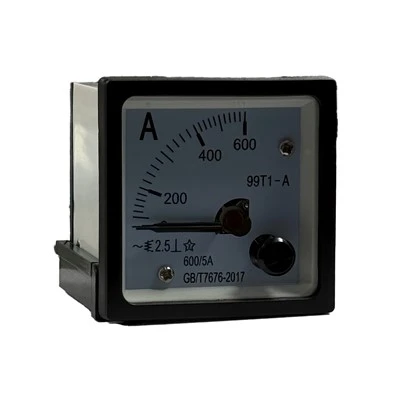
First, let’s start with the core: protection relays are basically the “traffic cops” of power systems. They’re supposed to spot faults (like overcurrent, short circuits, or voltage drops) fast, and trigger a breaker to cut power before equipment burns out. When they malfunction—meaning they trip when they shouldn’t, don’t trip when they should, or give totally wrong fault data—it’s a big problem. From our 10 years of supplying and supporting relays across industrial, commercial, and utility sites, we’ve narrowed the causes into four buckets: internal component failures, electrical noise interference, installation errors, and weird environmental stuff. Let’s dive into each.
Internal component failures are the ones we see the most, probably because relays are full of tiny, sensitive parts that don’t last forever. Take the microprocessor, for example—most modern relays are digital now, right? They run on a small CPU that processes all the power signals. We had a customer last year with a solar farm where their string protection relay kept under-tripping (meaning it didn’t cut power when a ground fault popped up) and it turned out the CPU’s solder joints had cracked from thermal cycling. Every day, the sun heats the panel, then it cools off at night—over 5 years, that expansion and contraction breaks down the tiny solder connections. Old analog relays aren’t immune either; their electromechanical parts, like the armature or the coil, wear out. I remember a steel mill where their overcurrent analog relay’s coil had degraded from constant inrush currents—over time, the coil’s insulation breaks down, so it can’t generate enough force to trip the breaker when it needs to. Oh, and don’t sleep on the power supply. Relays need a steady input voltage (usually 120VAC or 24VDC) to work. If the internal power supply’s capacitors go bad (which happens after 7-10 years, usually), the CPU gets flaky. We once had a warehouse with a fire protection system relay that failed because its power supply capacitors were bulging—no warning, just a dead relay when a fault hit. That’s the scary part: component failures often happen without a visible heads-up.
Next up: electrical noise. This is a sneaky one because it’s not a defect in the relay itself, but stuff going on around it that messes with its signal processing. Industrial sites are magnets for this—variable frequency drives (VFDs), welding machines, even heavy equipment motors pump out high-frequency electromagnetic interference (EMI) and radio frequency interference (RFI). I’ve seen a relay in a packaging plant trip randomly every time the inline sealer turned on. The sealer uses a lot of power and creates a huge EMI spike that bleeds into the relay’s input wiring. The relay’s microprocessor picked up that spike as a false fault and tripped the breaker. Another example: RFI from cell phone towers or CB radios. We had a utility substation where their feeder protection relay was acting up, and the tech found that a nearby ham radio operator was using their gear near the relay’s communication port. The RFI was corrupting the relay’s logic, making it trip incorrectly. Even low-voltage stuff, like data cables running parallel to power cables, can cause noise. If the wiring isn’t shielded or twisted, the power signals bleed into the control circuit that runs the relay—total “oops” that’s super common.
Then, installation errors. This is the big one that we deal with weekly, because so many electricians think “a relay is a relay” and don’t follow the specific specs. First wrong move: wrong CT ratio. Current transformers (CTs) step down the high line current to a level the relay can read, usually 5A. If someone picks a CT that doesn’t match the relay’s input, the relay gets a false current reading. For example, if you use a 1000:5 CT on a 2000A line, but the relay is set for a 2000:5 CT, it’ll think the current is half what it actually is, so it won’t trip when it should. We had a mine where their ground fault relay never tripped during a test, and the installer had used a 500:5 CT instead of the required 1000:5. Another common install mistake: loose connections. A loose wire on the CT input can cause a partial connection, which looks like a fault current to the relay. I’ve seen relays trip randomly because a technician just twisted a wire cap instead of crimping it properly on the CT terminals. Also, setting the wrong trip parameters. Every relay has settings—trip time, pickup current, fault type. If someone sets the pickup current too low, it’ll trip for normal overloads; too high, and it won’t trip during a real fault. Last month, a food plant’s refrigeration relay wasn’t tripping when a compressor locked up, and the tech had set the pickup current twice what it should have been. They just guessed instead of calculating the correct load current. Oh, and grounding mistakes. Relays need a proper reference ground to work right. If the relay’s cabinet isn’t grounded, or the signal ground is mixed with power ground, it picks up noise like I mentioned earlier. We once had a warehouse where their lighting relay kept misbehaving, and the ground wire to the relay was only 14AWG instead of the required 10AWG—too thin, so it couldn’t handle the current, causing voltage fluctuations that messed with the relay.
Environmental factors round this out. Relays are rated for specific temps, humidity, and vibration—if you put one somewhere outside its rating, it breaks down fast. Vibration is huge in industrial sites. Motors, pumps, and conveyor belts vibrate constantly, and over time that loosens internal parts or breaks solder joints. We had a sugar refinery where their boiler feed pump relay failed after 3 years, and the vibration from the pump had shaken loose the microprocessor’s pins. Another one: high humidity. Coastal sites or places with lots of moisture (like breweries, sewage plants) have humidity that can cause corrosion on the relay’s circuit boards. Corrosion eats away at the traces, so signals don’t get through. A brewery we worked with had their fermentation tank relay fail because of condensation—humidity was over 90%, and moisture seeped into the relay cabinet, causing corrosion on the CT inputs. Extreme temps too. If a relay is installed in a panel that gets too hot (like near a boiler, or in a roof-mounted panel with no ventilation), the internal parts overheat. Capacitors and semiconductors don’t like temps over 105°C—we’ve seen relays shut down randomly because the panel temp hit 110°F in the summer. Cold is a thing too; utility sites in the North can get -40°F, and some relays aren’t rated for that, so their LCD screens freeze or the battery backup dies.
Now, let’s talk about how we help as your go-to protection relays supplier. A lot of people think “buy a relay, plug it in, done”—but that’s not the case. We don’t just sell relays; we do post-supply support, so when someone has a malfunction, we can walk them through troubleshooting fast. For example, if a customer calls with a random tripping issue, we ask first: where’s it installed? Are there VFDs or welding near it? When did the issues start? That helps us narrow it down to noise or a loose wire, not a bad relay. We also provide installation guides tailored to each relay model, with CT ratio calculators and wiring specs—no more guessing. And we stock replacement parts (like capacitors, solder kits) for older relays, so you don’t have to replace the whole unit just because of a tiny part.
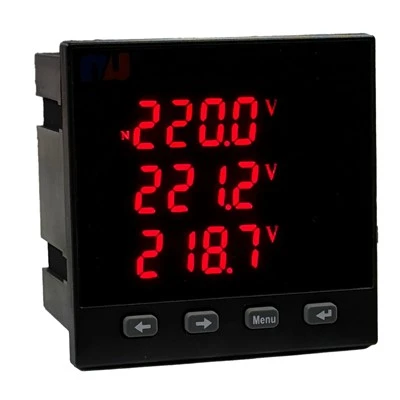
If you’re dealing with a relay malfunction, or you’re planning a new install and want to make sure you get the right relay for your site, hit us up. We don’t do one-size-fits-all—we work with industrial, commercial, and utility teams to pick relays that fit their specific environment, from vibration-heavy mills to coastal refineries. No jargon, no hard sells—just real support when you need it.
Analog Panel Meters References:
- IEEE Std C37.101-2012, “IEEE Guide for Generator Protection”
- NETA (National Electrical Testing Association) Standards, “Testing of Protection Relays and Control Equipment”
- “Electromagnetic Compatibility (EMC) for Industrial Control Systems”, International Electrotechnical Commission (IEC) 61000-6-4
- “Protection Relay Reliability: Root Cause Analysis”, Eaton Corporation Technical Report, 2021
- “Common Malfunctions in Electromechanical and Digital Protection Relays”, Schneider Electric, 2022
NAHO Electric Power Technology Co., Ltd.
NAHO Electric Power Technology Co., Ltd. is one of the most experienced protection relays manufacturers and suppliers in China, also supports customized service and OEM&ODM service. Welcome to wholesale CE approved protection relays in stock here and get quotation from our factory. Quality products and reasonable price are available.
Address: No.15 Zhengtai Road, Xinguang Industrial Zone, Liushi Town, Yueqing City, Zhejiang Province, P.R.China
E-mail: Dr502963156@gmail.com
WebSite: https://www.nahopower.com/
