As a supplier of boom concrete pump trucks, I get this question all the time from our customers: “How do I know when key parts on my pump are worn out enough to cause a problem?” It’s a fair concern—ignoring wear on critical components doesn’t just lead to costly breakdowns on job sites; it can also pose safety risks and extend project timelines. After 12 years in this industry, I’ve helped hundreds of operators develop practical, science-backed ways to measure wear on the parts that keep boom pumps running. I want to share what I’ve learned, because a well-maintained pump is a long-lasting pump. Boom Concrete Pump Truck

Start with the Parts That Matter Most for Your Boom Pump
First, let’s narrow down which components to focus on. For a boom concrete pump truck, the high-wear areas fall into three categories: the boom’s hydraulic system, the delivery pipeline, and the pump’s power end. Each has unique warning signs, and measuring wear here requires a mix of routine checks and targeted tools. Skipping these checks is like driving a car without checking the oil—you won’t notice a problem until it’s too late.
Let’s start with the hydraulic cylinder rods. These are what extend and retract the boom sections, so if they’re worn, your boom won’t move smoothly, and you could get stuck mid-pour. When I train new operators, I tell them the first sign of wear here is visible surface damage: scratches, pitting (small holes from pressure and friction), or corrosion. But to get an accurate measurement, you can’t just guess—you need a micrometer. I always carry a 0-25mm outside micrometer in my service kit; it’s compact, cheap, and gives precise readings.
Here’s how to use it correctly: Wipe the cylinder rod clean with a lint-free cloth to remove concrete residue or hydraulic fluid, then measure the rod’s diameter at three different points: near the rod’s base, in the middle, and within 100mm of the seal (this is where most wear happens because of friction with the seals). Compare these numbers to the original manufacturer’s specifications, which are listed in every boom pump’s operation manual. For example, if a 125mm diameter rod has a wear limit of 1.5mm, and your middle measurement is 123mm, that’s 2mm of wear—beyond the safe limit. When we supply new pumps, we include a quick-reference card with these limits, so operators don’t have to flip through the full manual every time. I also recommend checking the rod’s straightness with a dial indicator, especially if the pump has been used for heavy pours. A bent rod, even with minimal diameter wear, can cause seal damage over time.
Next, the hydraulic hose assemblies. These carry high-pressure fluid to the boom cylinders, and a worn hose can burst, leading to spills or sudden boom movement. I’ve seen this happen to a customer on a downtown construction site—they skipped checking their hoses, and one burst during a 20-meter pour, delaying the project by three hours. To measure wear on hoses, start with visual checks: look for bulges (called blisters), cracks on the outer cover, or soft spots. But to check for internal wear (which you can’t see), you can use a pressure gauge test. Connect a calibrated pressure gauge to the hose’s test port, then run the boom through its full range of motion while monitoring pressure fluctuations. A hose with internal abrasion will cause pressure drops or spikes, even if the visual condition looks fine. The rule of thumb we share is: if pressure varies by more than 10% from the standard operating pressure, it’s time to replace the hose. We also supply replacement hoses pre-tested for compatibility, so our customers don’t have to source low-quality parts that fail prematurely.
Then there’s the delivery pipeline—the pipes that carry concrete from the pump to the boom’s end. This is where concrete’s abrasive aggregate does the most damage. I always tell operators that pipeline wear is non-negotiable to check, because a failed pipe can spill concrete all over a job site, leading to cleanup costs and material waste. Measuring wear on pipeline pipes is straightforward, but it requires a tool called a pipe wear gauge. This is a thin, handheld tool that slides into the pipe’s end to measure the wall thickness. For boom pumps, the most common pipe size is 125mm, and the standard wall thickness for a new pipe is 10mm. The wear limit is usually 5mm, so if your gauge reads 6mm, that means 4mm of wall loss—close to the limit, and you should plan to replace it soon.
A common mistake I see operators make is only checking the visible pipe sections, like the ones on the ground. But the pipes in the boom’s upper sections, especially near the articulation points, wear faster because the concrete has to make sharper turns there. I recommend setting a schedule to check one pipe section every week—rotate through different parts of the boom so you don’t miss the high-wear spots. Some of our larger customers use ultrasonic testing for pipe wear, which is a non-destructive method that lets them check every pipe on the boom in 10 minutes, but that’s for fleets with 10+ pumps. For single-truck operators, the pipe wear gauge is more than enough.
Finally, the pump’s concrete cylinder—this is the part that pushes concrete into the pipeline, so it’s exposed to constant abrasive force. Measuring wear here is critical, because a worn cylinder will reduce pumping efficiency and increase the risk of blockages. The most accurate way to check the concrete cylinder is to use a bore gauge. After cleaning the cylinder’s interior, insert the bore gauge and take measurements at four points along the cylinder’s length: 100mm from each end, and the midpoint. Compare the readings to the original bore size; a wear limit of 0.8mm is standard here. If the difference between the smallest and largest measurement is more than 0.5mm, that means the cylinder is out of round, and it’s time to resurface or replace it. I always advise against waiting for a blockage to replace a worn cylinder—we’ve had customers spend thousands in cleanup and repair costs because they ignored a minor cylinder wear issue.
Tools and Routine Checks That Make Wear Measurement Easy
You don’t need a garage full of specialty tools to measure wear on your boom pump. The tools I recommend to all our customers are: an outside micrometer for cylinder rods, a pipe wear gauge, a pressure gauge, a bore gauge, and a digital caliper for quick, on-site checks. I keep these tools in a waterproof toolbox that fits in the pump truck’s storage compartment, so they’re easy to access between jobs.
Routine is just as important as tools. I tell every operator to do a “pre-pour check” before every job: run through the boom’s full range of motion, look for any visible damage on hoses, pipes, and cylinders, and check the cylinder rod’s condition. Then, set a monthly schedule for more detailed measurements: use the micrometer on hydraulic rods, the pipe gauge on two sections of the boom pipeline, and the bore gauge on the concrete cylinder. For pumps used on heavy projects (like high-rise construction, where concrete is pumped 100+ meters), cut that monthly schedule to every two weeks—those environments accelerate wear by 30% or more.
We also provide a free digital checklist to all our customers through our service portal, which lets them log their wear measurements and set reminders for when parts need replacement. For example, if a customer logs a 1.2mm wear on a cylinder rod, the checklist will alert them that they should order a replacement rod in 2-3 weeks, depending on their usage. This takes the guesswork out of maintenance, and it’s something we’ve seen reduce unexpected breakdowns by 40% for our long-term clients.
Common Mistakes That Hide Wear
After years in this industry, I’ve noticed a few mistakes that operators make that lead to missed wear signs. The first is ignoring minor scratches on cylinder rods. A lot of people think a small scratch is no big deal, but concrete and hydraulic fluid can get trapped in scratches, leading to pitting over time. That pitting causes seal damage, which leaks hydraulic fluid and reduces boom performance. A 0.5mm scratch might seem insignificant, but if left unchecked, it can turn into 2mm of wear in three months.
Another mistake is using generic replacement parts instead of OEM parts. We’ve seen customers buy cheap hydraulic hoses or pipeline pipes from third-party suppliers, and those parts wear out twice as fast as the OEM parts we supply. The wall thickness of cheap pipeline pipes is often only 8mm instead of the standard 10mm, so they reach their wear limit in half the time. It might seem like a cost-saving at first, but replacing parts every 6 months instead of every 18 months adds up to more costs in the long run.
The third mistake is not accounting for working conditions. If your pump is used in a dusty environment, or if you’re pumping high-aggregate concrete (like mix with large gravel), wear happens faster. I tell customers to adjust their measurement schedule: if you’re pumping high-aggregate concrete, check pipeline wear every 10 days instead of monthly. It’s a small adjustment, but it prevents a lot of headaches.
Why This Matters for Your Budget and Safety
I get it—maintenance feels like an extra cost when you’re focused on finishing jobs on time. But measuring wear on key components actually saves you money in the long run. A customer of ours in Chicago stopped measuring cylinder rod wear a few years ago, and they had a rod fail mid-pour on a 50-story building. The repair cost $12,000, and the job delay cost them $8,000 in lost fees. If they’d measured the rod every month, they would have replaced it for $2,500, avoiding the big repair and delay costs.
Safety is another big factor. A worn hydraulic hose can burst while the boom is extended, and a loose pipeline joint can dislodge, sending concrete flying. These incidents not only endanger workers on the job site but also lead to fines from OSHA in the U.S. or equivalent regulatory bodies elsewhere. Measuring wear isn’t just about keeping your pump running—it’s about keeping your team and others safe.
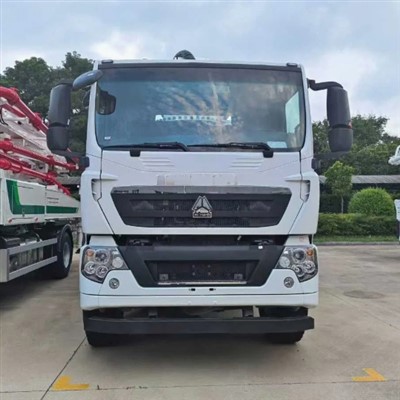
For our part as a boom concrete pump truck supplier, we don’t just sell trucks—we provide the support to keep them running. We offer free on-site wear measurement for our customers’ pumps, and our service team is available 24/7 to answer questions about maintenance schedules and part replacements. We also provide training sessions for operators, so they feel confident measuring wear themselves, instead of waiting for a technician to come out.
Self Loading Concrete Mixer Truckr If you’re a contractor, fleet manager, or pump operator looking to get more life out of your boom concrete pump, or if you’re in the market for a new pump, we can help. We can walk you through the right maintenance schedule for your specific pump model, and we offer flexible purchasing options to fit your budget. Don’t let unmeasured wear turn into a costly breakdown—reach out to us to discuss how we can support your equipment needs and ensure your projects run smoothly.
References
- Concrete Pump Maintenance and Wear Guidelines, National Ready Mixed Concrete Association, 2021.
- Hydraulic Component Wear in Mobile Construction Equipment, Society of Automotive Engineers International, 2019.
- Boom Concrete Pump Operation and Service Manual, XCMG Construction Machinery Co., Ltd., 2022.
- Non-Destructive Testing for Pipeline Wear in Concrete Pumps, Journal of Construction Equipment Technology, 2020.
Shandong Fuxin Automobile Technology Co., Ltd.
We’re well-known as one of the leading boom concrete pump truck manufacturers and suppliers in China, featured by quality products and good price. Please rest assured to buy advanced boom concrete pump truck made in China here from our factory. Contact us for more details.
Address: West of Nanshou Road, Beihai Road, Weifang City, Shandong Province
E-mail: h17616861003@gmail.com
WebSite: https://www.fuxinautomobile.com/
