If you’ve ever stepped into a craft brewhouse during a busy brew day, you’ve felt it before: that thick, warm haze hanging over the mash tun, the low rumble of steam venting from the boil kettle, and that subtle, hot tang in the air that tells you 200+ gallons of hot water and steam are being spent every hour. For decades, that heat would just drift away into the warehouse ceiling or out the exhaust stack, a quiet waste of energy that adds up fast for brewers. As a brewhouse system supplier who’s sat through hundreds of brew day debriefs with craft brewers, small production facilities, and even regional macro breweries, I’ve seen that wasted heat add $15k to $30k a year to a single brewhouse’s utility bills—money that could go to better grain, more yeast, or even keeping taproom lights on longer. That’s where brewhouse heat recovery comes in, and it’s not some fancy, unproven tech reserved for giant factories. It’s a practical, day-to-day upgrade that works with the core processes of every brewhouse, without slowing down brew day or adding complexity for your crew. Brewhouse System
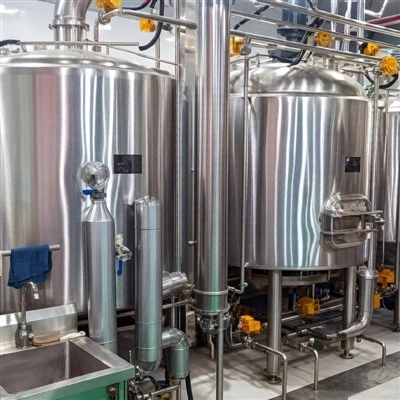
Let’s break this down simply, starting with how a standard brew day works, because heat recovery is just optimizing the steps you’re already doing. A typical all-grain brew day has four core steps: milling the grain, mashing (soaking milled grain in 150–170°F water to convert starches to sugars), lautering (separating the sweet wort from spent grain), boiling the wort (bringing it to 212°F, often with hops added), and cooling the wort down to 68–72°F in a whirlpool or plate chiller before fermentation. Every step generates or needs heat, but the biggest waste happens in the boiling and cooling phases. When you boil wort, you’re heating water to vapor (steam) to drive off unwanted compounds like DMS precursors, sterilize the wort, and extract flavors from hops. That steam has a lot of heat energy—for every gallon of wort you boil, you’re looking at roughly 9,700 BTUs of heat in the steam that leaves the boil kettle. Most traditional systems vent that steam straight to the outside, and then, to cool the wort down, you pump cold tap or well water through a plate chiller, which absorbs that heat and sends it down the drain at 100+°F. That’s double waste: you’re throwing out heat that could be reused, and you’re wasting cold water just to cool your wort.
Brewhouse heat recovery systems fix that loop by capturing that excess heat and redirecting it to the parts of the brewhouse that need it most. The core of every recovery setup is a heat exchanger, a simple device that transfers heat from one fluid (usually steam or hot drain water) to another (cold water, in most cases) without mixing the two. The key is matching the right type of heat exchanger to the right waste stream—because not all brewhouse waste heat is the same. The two most common streams we work with as a brewhouse supplier are boil kettle exhaust steam and spent cooling water from the wort chiller.
Let’s start with the steam, because that’s the biggest heat source on a brew day. Traditional boil kettles pull steam out through a vent to prevent pressure buildup, but instead of venting it outside, a steam heat recovery system diverts that stream through a condensing heat exchanger. Inside that exchanger, cold, untreated cold water (often pulled straight from the brewhouse’s cold water line) runs through a series of metal plates or tubes, and the hot steam hits those surfaces and condenses back into liquid water. That phase change releases a ton of heat—much more than just hot water alone. For every pound of steam that condenses, you get about 1,000 BTUs of heat, which is way more efficient than heating water with a gas burner. That recovered hot water (usually sitting at 160–180°F) gets piped straight back to the brewhouse’s mash tun or hot liquor tank (HLT), which is the tank you use to heat water for mashing and sparging (rinsing sugar from the spent grain).
Then there’s the spent cooling water. When you cool wort, the water that flows through the chiller to pull heat out of the wort heats up to 100–120°F, and most systems just drain that away. A waste water heat recovery setup captures that warm drain water and runs it through a different type of heat exchanger to preheat the cold water going into the steam recovery system, or even preheat the water for the washdowns that brewers use to clean the brewhouse between batches. That’s a secondary win—cleaning water is usually heated separately, so preheating it with waste heat cuts another chunk off utility bills.
A question we get all the time from brewers is: does this add downtime to brew day? That’s the biggest concern, because every minute a brewhouse isn’t brewing is lost revenue. The short answer is no, when the system is designed correctly. A well-integrated heat recovery system syncs up with your existing brewhouse controls, so it runs automatically during the phases when waste heat is generated. For example, as soon as your boil kettle’s vent fan turns on, the steam recovery exchanger activates, preheating your HLT water while you’re doing whirlpool and hop stand steps—time your crew would otherwise spend waiting anyway. The only extra space you need is a small footprint for the heat exchanger, usually 2×4 feet of floor space, which fits in most existing brewhouses without a full rework. We’ve installed these on 10 barrel brewhouses in 500 sq ft rooms with zero layout changes, and on 100 barrel facilities with minimal pipe rerouting during a scheduled weekend shutdown.
But heat recovery isn’t one-size-fits-all, and that’s where our work as brewhouse system suppliers comes in. A lot of brewers try to piece together off-the-shelf heat exchangers from industrial suppliers, and they run into issues like inconsistent heat, cross-contamination between fluids (a big no-no, because you don’t want any steam or drain water getting into your brewing water), or systems that can’t handle the fast, 20–30 minute boil cycles that craft brewers rely on. The best setups we design are tailored to a brewhouse’s exact size, fuel source, and brew day schedule. For example, a brewery that does two batches a day, 5 days a week, needs a different system than a regional brewery that does three 100-barrel batches a day. If a brewery is using natural gas to fire their boil kettle, we’ll match the steam exchanger’s capacity to their burner’s output, so it captures 70–80% of the steam’s heat instead of wasting 50% like a cheap off-the-shelf unit. If a brewery is using electric boilers, we’ll adjust the system to use more of the waste cooling water heat, since their primary heating is already controlled.
Another common misconception is that heat recovery only works for new brewhouses. We’ve retrofitted dozens of existing brewhouses that were installed 10, 15, even 20 years ago, and the ROI usually hits in 1–3 years. For a 30 barrel brewhouse, that’s an initial investment of $12k–$18k, and annual savings of $8k–$12k on gas and water bills. For a 60 barrel system, that jumps to $20k–$28k upfront, with $14k–$20k in annual savings. That’s money that can go straight into beer, not utilities—something every brewer cares about, especially as energy costs have spiked over the last few years.
We also prioritize food-grade materials for every heat recovery component, because there’s no room for contamination in beer. The plates and tubes in our exchangers are 304 stainless steel, the same material used in mash tuns and boil kettles, so they’re corrosion-resistant, easy to clean, and won’t leave any metallic off-flavors. We also include integrated bypass valves in every system, so if a brewer is adding specialty ingredients like fruit purees or oak chips that could create extra sediment in the steam, they can switch the recovery system to divert steam straight to the vent without any downtime. That flexibility is key—we build our systems to work with how brewers actually brew, not just the textbook process.
One story that sticks with me is a small craft brewery in Portland that was running a 20 barrel brewhouse, and was spending almost $28k a year on gas and water. They tried a cheap heat recovery unit from a big box industrial supplier, and it broke down three times in their first year, and was only capturing 40% of the steam’s heat. We removed that unit and installed our custom retrofitted heat recovery system, syncing it to their existing HLT and plate chiller. Within six months, their utility bills dropped by $1,200 a month, and they didn’t have a single breakdown in two years. They used the savings to add a small canning line, which doubled their production. That’s the impact heat recovery can have—not just on utility costs, but on growing your brewery.
If you’re a brewer reading this, you know that brewhouse equipment is a big investment, and the last thing you want is to add something that slows you down or compromises your beer. But heat recovery is different—it’s not an extra expense, it’s a way to make your existing equipment work harder for you, while being more sustainable. It cuts your carbon footprint, reduces water use (because you’re not wasting that hot cooling water down the drain), and improves your bottom line.
At the end of the day, every brewhouse has a bunch of extra heat that it’s just throwing away. Our job as brewhouse system suppliers is to capture that heat, turn it into something useful, and make sure it fits seamlessly into your brew day, no extra headaches. If you’re looking to cut utility costs, make your brewhouse more efficient, and invest in something that pays for itself, reach out to us to discuss your needs. We’ll walk through your current brew day, map out the best setup for your system, and show you exactly how much you’ll save.
Stainless Steel Tanks References
- “Craft Brewer’s Guide to Energy Efficiency,” Brewers Association, 2022
- Heat Exchanger Selection for Brewery Applications, ASHRAE Journal, 2021
- “Retrofitting Heat Recovery Systems in Small Production Breweries,” Brewing Technology Journal, 2020
Wenzhou Jinggong Machinery Equipment Co., Ltd.
We are one of the most professional brewhouse system manufacturers and suppliers in China. With abundant experience, we warmly welcome you to buy customized brewhouse system at competitive price from our factory. If you have any enquiry about quotation, please feel free to email us.
Address: No.Jiadi Industrial Zone, Yaoxi Town, Longwan District, Wenzhou City, China.
E-mail: jinggong2026@163.com
WebSite: https://www.jg-ind.com/
