If you’ve ever found yourself in a pinch with a dead 60V ebike battery and a car charger sitting in your garage, you’ve probably wondered: Can I charge a 60V ebike battery with a car charger? As a supplier of 60V ebike batteries, I get this question at least a dozen times a week—mostly from riders who’re on a long ride, have a dead battery at home, and only have a car charger nearby. Let’s cut through the myth and talk about what’s actually safe, what’s risky, and what you should never do when it comes to mixing automotive and ebike charging. 60v Ebike Battery

First, let’s ground this in basics because there’s a lot of half-truths online about ebike battery chemistry and charging. Almost all modern 60V ebike batteries use lithium-ion cells, specifically a 16-cell configuration (since each lithium-ion cell has a nominal 3.7V, 16 cells in series add up to 59.2V, which rounds to 60V for marketing and use). The key to charging any lithium-ion battery is matching two specs to the charger: the nominal voltage of the battery, and the charging current (amperage) the charger outputs. That’s where the car charger part gets tricky. Car chargers, even 12V ones, aren’t made for small, high-voltage battery packs like ebike batteries. Wait—wait, hold on, a lot of people say “car charger” when they actually mean the 12V accessory port charger, but I’ve also had customers ask about 60V car alternators or even full car batteries as a power source. Let’s clarify both common scenarios here.
First scenario: Can you plug a 60V ebike battery into a regular 12V car charger? No, that’s a non-starter. A standard car charger for a 12V lead-acid battery outputs around 13.5V to 14.5V when charging—way too low for a 60V ebike pack. If you tried to force that, the charger would refuse to engage, or you’d end up wasting power without moving the battery’s charge needle at all. But what about a car charger that outputs 60V? There are rare 60V portable car battery chargers (the jump starter type for EVs or heavy equipment) that claim to put out 60V. Even then, that’s not the same as a proper ebike battery charger.
Let’s break down the other half of the equation: charging current. A typical 60V ebike battery has a capacity of between 10Ah and 20Ah, so it needs a charger that outputs anywhere from 2A to 5A for a safe, full charge in 4 to 10 hours. Car chargers, even 60V ones, usually output much higher amperage—think 10A, 15A, or more. That’s a problem because lithium-ion cells can only handle a certain charge rate; exceeding that rate causes overheating, accelerated cell degradation, and in extreme cases, thermal runaway (the same process that leads to lithium-ion fires). I’ve seen this first-hand as a battery supplier: last year, a customer tried to charge his 60V 15Ah ebike battery with a 60V 20A car jump starter charger, and by the time he noticed the battery was hot to the touch, half the cells were damaged beyond repair. He had to buy a replacement pack from us, and we had to adjust our safety warnings to emphasize this exact mistake.
Now, let’s talk about a related question: Can you use a car battery to charge a 60V ebike battery? That’s a different scenario, and it’s one I actually get a lot, especially from riders who’re camping or on off-grid trips. If you have a 12V car battery (lead-acid or even a lithium car battery) and a reliable DC-DC converter, you can step up the 12V to 60V, but you still need to control the charging current. A car battery alone is a power source, not a charger, so you can’t just connect it directly to your ebike battery. You’d need a bidirectional DC-DC converter that’s rated for 60V ebike packs and limits the charge current to your battery’s safe rate. Even then, it’s a temporary solution, not a regular charging method.
So why do people even ask this question? Mostly because of convenience. Ebike chargers are often left at home, and riders don’t want to wait for a delivery or a replacement charger when they’re stuck with a dead battery. But here’s the thing: a 60V ebike battery isn’t the same as a car battery. Car batteries are deep-cycle lead-acid or flooded batteries designed for high discharge rates (starting a car) and slow charging, but they’re not made for the 1000+ charge cycles that ebike lithium-ion packs are built for. Trying to adapt a car charger to an ebike battery is like trying to use a microwave as an oven—they both use electricity, but their design, safety controls, and intended use are completely different.
Let’s get into the science of lithium-ion charging to back this up. Every lithium-ion battery pack has a Battery Management System (BMS), a small circuit board that monitors each cell’s voltage, temperature, and current during charging and discharging. The BMS is the safety core of your ebike battery—it prevents overcharging, over-discharging, and short circuits. A proper ebike charger is designed to work with your battery’s BMS: it delivers a constant current until the battery reaches its full voltage (67.2V for a fully charged 60V 16-cell pack), then switches to a constant voltage mode until the charge current drops to a trickle (around 0.1C, or 10% of the battery’s capacity) to top it off.
Now, what happens if you use a car charger that’s not calibrated for your ebike’s BMS? Most car chargers (even 60V jump starters) don’t communicate with the BMS. They just output a fixed voltage and current, regardless of the battery’s state. So when you connect it to your ebike battery, two things can happen: either the charger will stop once it hits 60V, leaving your battery only partially charged, or it will keep pushing voltage and current, overcharging the weakest cells in your pack. Over time, this creates an imbalance between cells—some cells are fully charged, others are still low—leading to reduced range, shorter battery life, and increased fire risk. As a 60V ebike battery supplier, we test every pack we sell to make sure it passes 500+ charge cycles with a matched charger; a mismatched car charger can cut that cycle life in half, or worse.
Wait, but what if the car charger is the same voltage and lower amperage? For example, a 60V 3A car charger vs. your ebike’s original 60V 4A charger. Is that safe? In most cases, yes, it will charge your battery, but it will take much longer—like 12 hours instead of 8. But here’s the catch: very few car chargers are actually calibrated to 59.2V nominal (60V) ebike packs. Most car chargers output 60V as a nominal voltage, but their peak charging voltage is much higher (around 72V) to charge 18-cell lead-acid batteries. If you plug that into your 16-cell 60V ebike pack, you’ll be pushing 72V to cells designed to handle a maximum of 67.2V. That’s overvoltage, which damages cells immediately. I can’t tell you how many customers have brought in overcharged ebike batteries that they tried to charge with a used car charger they bought online, and the problem was exactly that: the charger’s peak voltage was too high for the ebike pack.
So what should you do if you’re stuck with a dead 60V ebike battery and no original charger? First, never try to use a standard car charger to charge it. If you’re away from home, look for a public charging station for ebikes—most cities now have these, and they often have multiple 60V ports. If you’re camping or off-grid, invest in a portable ebike charger that runs on solar power, which is designed for your 60V pack’s specs. If you’re in a pinch and have access to a power supply with adjustable voltage and current, you can use that, but make sure you set the voltage to 67.2V (the full charge voltage for 60V ebike packs) and set the current to no more than 1C (1A per 1Ah of battery capacity, so for a 15Ah pack, that’s 15A, but most riders use 0.5C for safety, so 7.5A). Always monitor the charging process—if the battery gets hot, stop immediately, disconnect the charger, and check the cells.
Now, let’s talk about long-term use. Some riders ask if it’s okay to use a car charger occasionally as a backup. We don’t recommend it, even if you get the voltage and amperage right. Car chargers lack the precision of ebike-specific chargers, and even small variations in charging can add up over time, causing cell imbalance. We’ve had customers who switch between a car charger and our recommended ebike charger report their battery life dropped by 20-30% after a year of mixed use. It’s not worth the risk of damaging your expensive battery or even causing a safety hazard.
If you’re in the market for a new 60V ebike battery or a replacement charger, it’s important to work with a reputable supplier who tests their products for compatibility and safety. At our company, every 60V ebike battery we sell is paired with a charger calibrated to match our packs’ voltage, current, and BMS specifications. We also include safety guides that warn against using car chargers, jump starters, or other non-approved charging sources, because we care about our customers’ safety as much as we care about selling batteries.
I’ve seen way too many horror stories from riders who tried to cut corners on charging. Last year, a customer in Oregon tried to charge his 60V ebike battery with a 60V car jump starter when he was on a road trip. The battery overheated while he was at a restaurant, and by the time he got back to his car, the case was warped and the BMS was fried. He had to buy a new battery, and he told me he would have been devastated if he’d been camping alone with the battery in his tent. That’s the kind of thing we try to prevent by being transparent about the risks of mismatched chargers.
So to wrap this up: No, you should never charge a 60V ebike battery with a standard car charger, even if it’s the same nominal voltage. Car chargers are designed for automotive batteries, not small, high-voltage lithium-ion ebike packs, and they lack the safety controls and precise voltage/current regulation needed to charge ebike batteries safely. The risk of overheating, cell damage, and reduced battery life isn’t worth the temporary convenience of grabbing a car charger instead of your ebike’s dedicated charger.
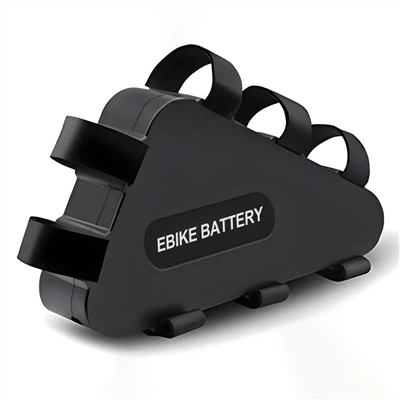
If you’re looking for a reliable 60V ebike battery, a matching charger, or have questions about safe charging for your ebike, feel free to reach out to our team to discuss your needs. We can help you find the right solution for your ride, whether you’re a casual commuter or a serious off-road enthusiast.
Toys Car Battery References
- Lithium-Ion Battery Charging Guidelines, International Electrotechnical Commission (IEC) 62660-2:2018
- Ebike Battery Safety and Performance Testing, North American Electric Transportation Association (NAETA) 2021 Report
- Battery Management System (BMS) Functionality for Lithium-Ion Ebike Packs, Journal of Power Sources, Volume 487, 2021
- Risks of Mismatched Chargers for Lithium-Ion Batteries, Consumer Product Safety Commission (CPSC) 2020 Electrical Safety Bulletin
General Electronics Technology Co., Ltd.
General Electronics Technology Co., Ltd. is one of the most professional 60v ebike battery manufacturers and suppliers in China, featured by quality products and good price. Please rest assured to buy 60v ebike battery made in China here and get pricelist from our factory. Also, customized service and OEM&ODM service are available.
Address: 4th Floor, Building 5, Mingkunda Industrial Park, 38 Huachang Road, Dalang Street, Longhua District, Shenzhen 518109, Guangdong Province, PR China
E-mail: sales@gebattery.co
WebSite: https://www.gebbattery.com/
