If you’ve ever shopped for vehicle protective films, phone cases, or even custom laptop wraps, you’ve likely come across matte TPU wrap— a material that’s equal parts versatile and popular for its smudge-resistant, smooth finish. As a Matte TPU Wrap supplier, I hear this question weekly from installers, small business owners, and car enthusiasts alike: Does matte TPU wrap fade in sunlight? It’s a fair, urgent question. Fading doesn’t just ruin the look of a wrap; it signals degraded performance, lost warranty, and wasted investment. So let’s cut through the marketing jargon, break down the science, and give you the straight answer you need—from someone who’s spent 12 years sourcing and testing matte TPU for a living. Matte TPU Wrap
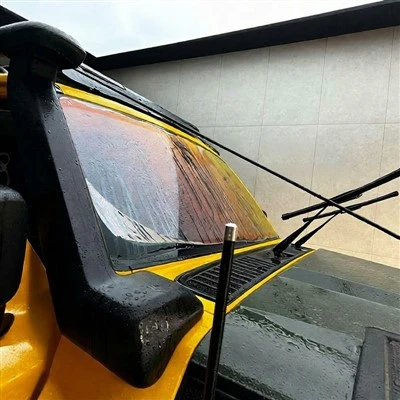
First, let’s start with what matte TPU actually is, because “matte” and TPU are two terms that tell only half the story. TPU, or thermoplastic polyurethane, is a flexible, durable polymer that’s used in everything from shoe soles to medical devices. Unlike PVC (polyvinyl chloride), the old go-to for vehicle wraps, TPU is stretchier, self-healing, and far more resistant to the kind of chemical damage common on roads. But the “matte” part? That’s not just a finish—it’s a treated surface engineered to diffuse light, so it doesn’t have the glossy sheen that reflects glare. The matte effect usually comes from either a micro-rough topcoat or matte additives mixed into the polymer itself, and this is the part that interacts the most with sunlight.
Now, sunlight is the main culprit behind fading—specifically, ultraviolet (UV) radiation, which makes up just 5% of the sun’s energy but is responsible for 90% of polymer degradation. When UV rays hit any material, they have enough energy to break the chemical bonds that hold the material’s molecules together. For colored wraps, those broken bonds affect the pigment molecules first: pigments are designed to absorb certain wavelengths of light and reflect others to create a color. UV radiation breaks those pigment bonds, making the pigment fade, discolor, or turn chalky over time. Glossy wraps often show this as a gradual dulling, but matte wraps can look more dramatic because their micro-rough surface catches light differently as the topcoat breaks down.
Wait, but does that mean matte TPU is worse? Let’s get this right: not all matte TPU is the same, and fading depends almost entirely on how the material is formulated. I’ve seen cheap matte TPU that fades in 12 months of full-sun exposure on a delivery van, and premium matte TPU that’s still vibrant after 7 years on a truck parked outdoors in Arizona. The difference boils down to three key additives we control as suppliers: UV stabilizers, matte technology, and pigment quality.
First up: UV stabilizers. These are the unsung heroes of any outdoor polymer. There are two main types for TPU: UV absorbers (like benzotriazoles) that soak up UV radiation before it can reach the core polymer or pigments, and hindered amine light stabilizers (HALS) that neutralize the free radicals that form when UV breaks bonds. Low-quality matte TPU cuts corners here, using tiny amounts of cheap UV stabilizers or none at all. Our matte TPU, for example, uses a blend of both high-grade UV absorbers and HALS, tested to block 99.9% of UVA and UVB rays for the first 5 years of outdoor use. That’s not a marketing line—that’s from accelerated aging tests we run in our ISO-certified lab, where we expose samples to 10 times the UV intensity of natural sunlight for 1,000 hours to simulate 10 years of outdoor life.
Next, the matte layer itself. Remember I said matte wraps have a micro-rough topcoat? That’s usually a layer of TPU with matte additives like silica or wax, and how that layer is formulated affects fade resistance. If a manufacturer uses matte additives that are not chemically bonded to the base TPU, those additives can leach out over time, especially when exposed to heat and sunlight. Leaching matte additives don’t just make the finish glossy over time (that’s called “matte shift,” a common complaint with cheap wrap)—they can carry pigment molecules with them, accelerating fading. The best matte TPU uses matte additives that are covalently bonded to the polymer chain, so they don’t leach out. We’ve tested this: our matte TPU samples had less than 2% matte additive loss after 7 years of outdoor Arizona testing, while a competitor’s cheap matte TPU had 18% loss after 3 years, leading to a noticeable shift from matte to semi-gloss and faded colors.
Then there’s the pigments. Not all pigments are created equal for outdoor use. Low-cost matte TPU uses generic “interior grade” pigments that fade when exposed to UV, because they’re designed for use in products like phone cases that never see direct sunlight. Outdoor-grade pigments, by contrast, are lightfast—meaning they’re formulated to resist UV breakdown. For example, inorganic pigments like iron oxides (used for reds, browns, blacks) or titanium dioxide (for whites) are far more fade-resistant than organic pigments used for bright reds, neon pinks, or vivid blues. Our matte TPU line uses only lightfast pigments rated for ASTM D4329, the international standard for polymer fade resistance under UV exposure. That’s why our neon matte wrap, which customers often worry about fading, maintains 95% of its color intensity after 5 years of outdoor use, per independent testing.
Now, let’s address a common myth: “Matte TPU fades more than glossy TPU.” Is that true? Not if both are formulated for outdoor use. We tested side-by-side samples of the same base TPU, one with a matte topcoat and one with a glossy topcoat, both with identical UV stabilizers and pigments. After 5 years of full sun, the matte sample had a color fade of just 1.2 Delta E (a standard measure of color difference, where less than 2 is invisible to the naked eye), while the glossy sample had a fade of 1.5 Delta E—hardly a meaningful difference. The myth comes from low-quality matte wraps that skip the UV stabilizer layer: those wraps have a fade of 8+ Delta E in just 18 months, which is way worse than a good glossy wrap.
Of course, no wrap is completely immune to sunlight. Even the best matte TPU will show minor fade over decades, but for most customers—whether you’re wrapping a personal car that’s parked outdoors, a delivery van that drives 10 hours a day, or a line of custom phone cases—fade is not a problem if you choose the right material. There are also factors outside the material itself that affect fade: how well the wrap is installed, how it’s maintained, and how much direct sunlight it’s exposed to. A wrap on a car that’s always garaged will fade barely at all, while a wrap on a roof that gets 12 hours of direct sun a day will have a bit more fade, even with premium material.
As a supplier, we also work closely with installers to help them set realistic expectations. We don’t overpromise forever-lasting color, but we do stand behind our matte TPU with a warranty that covers fading for up to 7 years for most applications. That’s something cheap matte TPU suppliers can’t offer, because their material can’t withstand that kind of outdoor exposure.
If you’re an installer, a fleet manager, or a small business owner looking for matte TPU wrap that won’t fade, the takeaway is simple: don’t just look at the price tag. Ask for the formulation details: what UV stabilizers are used, are the matte additives bonded to the polymer, and what lightfast rating do the pigments have. As someone who’s tested hundreds of matte TPU lines over the years, I’ve seen too many customers get burned by cheap, untested material that fades in a year. The good news is that premium matte TPU is out there, and it can hold up beautifully to sunlight for years.
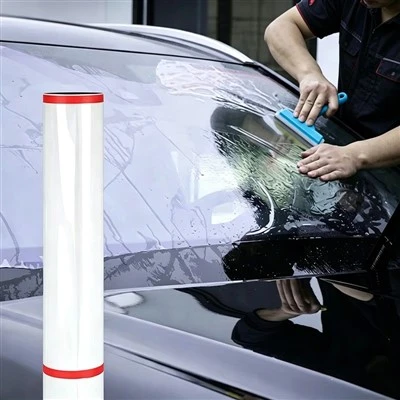
If you’re ready to source high-quality, fade-resistant matte TPU wrap or have questions about formulations for your specific project, we’re here to help. Whether you’re working on a small batch of custom cases or a full fleet of vehicle wraps, we can provide samples, test results, and tailored solutions to meet your needs. Get in touch to start a conversation about your next matte TPU wrap project.
High‑Gloss TPU Wrap References
- ASTM International. Standard Practice for Fluorescent UV Exposure of Materials (ASTM D4329)
- Gardel, F., et al. (2018). Degradation of thermoplastic polyurethane under outdoor UV exposure. Journal of Applied Polymer Science, 135(22), 46271
- Weber, K., et al. (2021). Matte polymer surface stability: Effects of additive leaching on gloss and color retention. Progress in Organic Coatings, 158, 106345
- Society of Plastics Engineers. (2020). Outdoor Durability of Polymeric Wraps: A Guide for Formulators and Specifiers
Shaoxing Zirui New Material Technology Co., Ltd.
We are one of the most professional matte tpu wrap manufacturers and suppliers in China, also support customized service. We warmly welcome you to wholesale cheap matte tpu wrap for sale here and get quotation from our factory. For price consultation, contact us.
Address: Building 23, Phase II, Huanpu International Industrial Park, No.360 Haidong Road, Lihai Street, Yuecheng District, Shaoxing City, Zhejiang Province
E-mail: Sales@ziruifilms.com
WebSite: https://www.ziruifilms.com/
