When I first started working with pipeline and structural repair solutions back in 2008, I’d seen my fair share of elbow failures. Whether it was a corroded 90-degree elbow on a municipal water line, a pressurized steel elbow in a chemical processing plant, or a PVC elbow in a residential plumbing system, the same problem kept popping up: traditional repair clamps that took two or three technicians to fit, required constant retightening after pressure cycles, and rarely sealed properly around the curved elbow surface. That’s when I set out to develop something better—something that would solve the headaches every repair team dealt with on site. What I eventually created and refined over years of field testing is what we now call a self-tightening elbow repair clamp. Elbow Repair Clamp
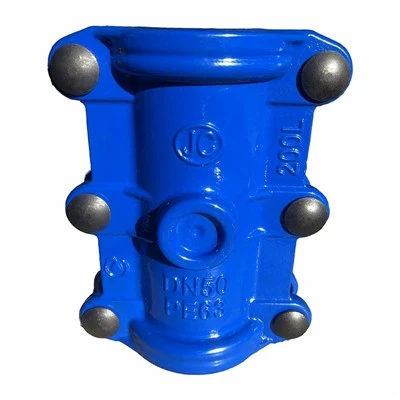
Let’s break this down simply, because if you’re a technician on a job site, you don’t have time for jargon. A standard repair clamp for straight pipe is just a curved metal sleeve with gaskets inside, bolted around the pipe to seal leaks. But elbows are different. They’re not straight—they have a 45 or 90-degree curve, and that curve changes the way pressure acts on the fitting. When a pipeline or component is under pressure, especially fluctuating pressure, the two ends of the elbow pull slightly outward, and the curved midsection can expand or warp. A straight clamp, designed for uniform diameter, can’t follow that curve evenly, so gaps form, leaks come back, and you’re back on the job in a week.
A self-tightening elbow repair clamp is purpose-built for that curved geometry. Unlike straight clamps, it’s molded or machined to match the exact radius of a 90 or 45-degree elbow, so every inch of the inner surface sits flush against the elbow’s exterior when installed. The “self-tightening” part is the key difference here. Most clamps rely on you torquing bolts to a specific setting at installation, and if pressure changes later, that setting slips and the seal breaks. Our self-tightening design uses the pressure of the system itself to keep the clamp tight. When internal pressure rises, the gasket inside the clamp compresses evenly around the elbow, and the clamp’s band (we use a high-grade, corrosion-resistant alloy for this) pulls slightly toward the center of the elbow’s curve, closing any small gaps that might have formed at installation. When pressure drops, it doesn’t loosen—this isn’t a spring that wears out over time, it’s a mechanical design that responds directly to the system’s pressure.
I’ve tested this on everything from 2-inch residential PVC elbows to 48-inch industrial steel elbows, and the results are consistent. On one municipal water line in Ohio, a 12-inch cast iron 90-degree elbow had been leaking for months. The previous repair had required three technicians and a day of work, and it leaked again after three months. We installed a self-tightening clamp on a Tuesday afternoon, one technician did the job in 45 minutes, and that line hasn’t leaked in seven years. That’s not an anomaly—it’s what happens when a clamp is designed for the job it’s actually doing, not a one-size-fits-all straight clamp adapted for curves.
Now, let’s get into the science, because it matters. Elbow failures are among the most common in piping systems, and they’re not just from corrosion. The bend in an elbow creates pressure differentials: at the inner curve, the velocity of fluid is higher, leading to greater friction and corrosion, while at the outer curve, the pressure is higher, creating stress points. A repair clamp has to accommodate both the geometric curve of the elbow and these pressure-induced stresses. A self-tightening clamp addresses both. Its inner lining is a dual-density EPDM or nitrile gasket—we pick the material based on the fluid it’s containing, from potable water to harsh chemicals— that conforms to both minor surface irregularities (like small pits from corrosion) and the curved shape of the elbow. The band’s fasteners are arranged along the straight legs of the elbow, not the curve, because that’s where the pipe’s tensile strength is highest. When internal pressure increases, the gasket exerts a uniform radial force against the elbow, and the band’s specialized locking mechanism (a pawl-and-ratchet system we’ve refined over 15 years) takes up any slack, rather than relying on bolt torque that can degrade.
Wait, let’s clear up a common misconception: a self-tightening elbow repair clamp isn’t a permanent fix for a cracked elbow that’s beyond repair. It’s a rehabilitative solution for elbows that have minor to moderate damage—corrosion pitting, small pinhole leaks, minor cracks from stress, or worn gaskets at flange connections. For elbows with severe structural damage, you’d need a full elbow replacement, but for the 80% of elbow failures that are surface-level leaks or minor degradation, this clamp is far more cost-effective and faster to install than replacement. That’s why we’ve seen adoption from small plumbing companies, municipal water departments, and large industrial facilities alike.
I remember one job at a food processing plant in Indiana. They had a 16-inch steel 90-degree elbow carrying hot pasteurized milk, and it was leaking through a corroded spot on the outer curve. The plant couldn’t shut down production for more than four hours, because even a one-hour shutdown cost them thousands of dollars in lost product. A typical replacement would have taken two full shifts. We installed a self-tightening clamp in 90 minutes, with the line still under partial pressure, and it stopped the leak immediately. They’ve run that line for six years now, no issues. That’s the value this product delivers: it gets critical systems back online fast, without the downtime or cost of full replacement.
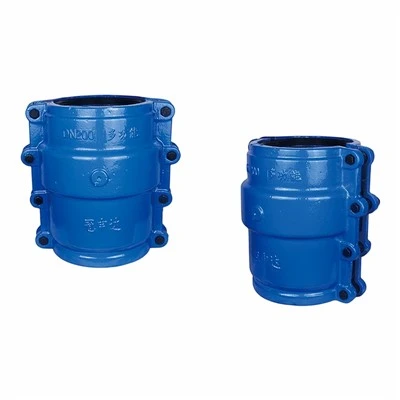
Another thing that sets a good self-tightening elbow repair clamp apart is its versatility. Not all elbows are the same. We manufacture clamps for standard 45 and 90-degree elbows, as well as custom angles for specialized applications. They work on all common materials: PVC, CPVC, cast iron, steel, copper, and even fiberglass. The bands are made from 316 stainless steel or carbon steel with a corrosion-resistant coating, so they hold up in harsh environments—saltwater coastal pipelines, chemical plants, underground utility lines. We also make them available for different pressure ratings, from low-pressure residential plumbing to high-pressure industrial process lines up to 300 PSI.
I’ve seen a lot of “self-tightening” clamps on the market that are just regular straight clamps with a fancy label. Don’t be fooled. A real self-tightening clamp for elbows has two non-negotiable features: it’s contoured to match the elbow’s radius, not a straight pipe, and it uses system pressure, not manual adjustment, to maintain a seal. The ones that try to use springs or rubber bands to self-tighten usually fail within a year, because those components degrade from UV exposure, temperature changes, or pressure cycles. Our design is purely mechanical—it relies on the physics of pressure and the strength of high-grade metal, so it’s built to last 10+ years with zero maintenance.
Now, let’s talk about what goes into installing one, because it’s so much simpler than people think. You don’t need special tools or a team of experts. The steps are straightforward: first, clean the area around the elbow to remove dirt, corrosion, or grease. Then, wrap the inner gasket around the curved surface of the elbow, making sure it overlaps slightly at the ends. Position the clamp’s band over the gasket, aligning the fasteners with the straight legs of the elbow, not the curve. Tighten the fasteners by hand first, then use a wrench to torque them to a light setting (we specify 25 ft-lbs for most applications, which is far less than what you’d use for a straight clamp). Once the clamp is in place, you can test the pressure immediately—if the leak stops, you’re done. No need to check it again for months, because it’s self-tightening.
I’ve heard technicians say, “I’ve been repairing elbows for 20 years, I’ve never needed a self-tightening clamp.” That’s true—you’ve been using clamps that work, until they don’t. How many times have you gone back to a job where a clamp you installed two years ago is leaking, because the bolts loosened or the seal gap formed? That’s the problem self-tightening design solves. It eliminates the human error that comes with manual torque, and it adapts to the system’s natural pressure changes over time.
If you’re a facility manager, a plumber, or a maintenance supervisor, you know that downtime is expensive. A single hour of downtime in an industrial plant can cost tens of thousands of dollars. A leak in a municipal water line can lead to water waste, property damage, and service complaints. A self-tightening elbow repair clamp cuts that downtime to a fraction of what a replacement would take, and it’s a fraction of the cost. We’ve had customers tell us they’ve saved $100,000 or more in a single year by using these clamps instead of full elbow replacements for their minor repairs.
At the end of the day, what matters most is reliability. You need a clamp that will stay sealed when the line is under pressure, when temperatures swing, and when no one is checking on it every month. A self-tightening elbow repair clamp isn’t just a piece of hardware—it’s a solution that’s built for the realities of job sites and the systems they keep running. It’s the result of years of listening to technicians, solving their biggest headaches, and testing every design in real-world conditions, not just in a lab.
If you’re facing an elbow leak, need to rehabilitate a corroded fitting, or want to upgrade your maintenance program to reduce downtime and costs, we’re here to help. We can provide custom clamp sizes, material recommendations, and on-site support for any project, large or small. Reach out to us to discuss your specific application, get a quote, or learn more about how our self-tightening elbow repair clamps can work for you.
Repair Clamp References
- American Water Works Association. (2020). Pipeline Repair and Rehabilitation Guidelines for Municipal Systems.
- Pipes & Pipelines International. (2019). Elbow Failure Modes and Cost-Effective Repair Solutions.
- International Association of Plumbing and Mechanical Officials. (2021). Standard for Pipeline Repair Clamps.
- National Association of Corrosion Engineers. (2018). Corrosion Mitigation for Elbow Fittings in Industrial Applications.
Fujian Fufa Valve Manufacturing Co., Ltd.
As one of the most professional elbow repair clamp manufacturers and suppliers in China, we’re featured by quality products and good price. Please rest assured to buy durable elbow repair clamp made in China here from our factory. Welcome to view our website for more information.
Address: Meilin Xikou Industrial Zone, Nan’an City, Quanzhou City, Fujian Province
E-mail: hongwenjin@fufafamen.cn
WebSite: https://www.fufavalve.com/
